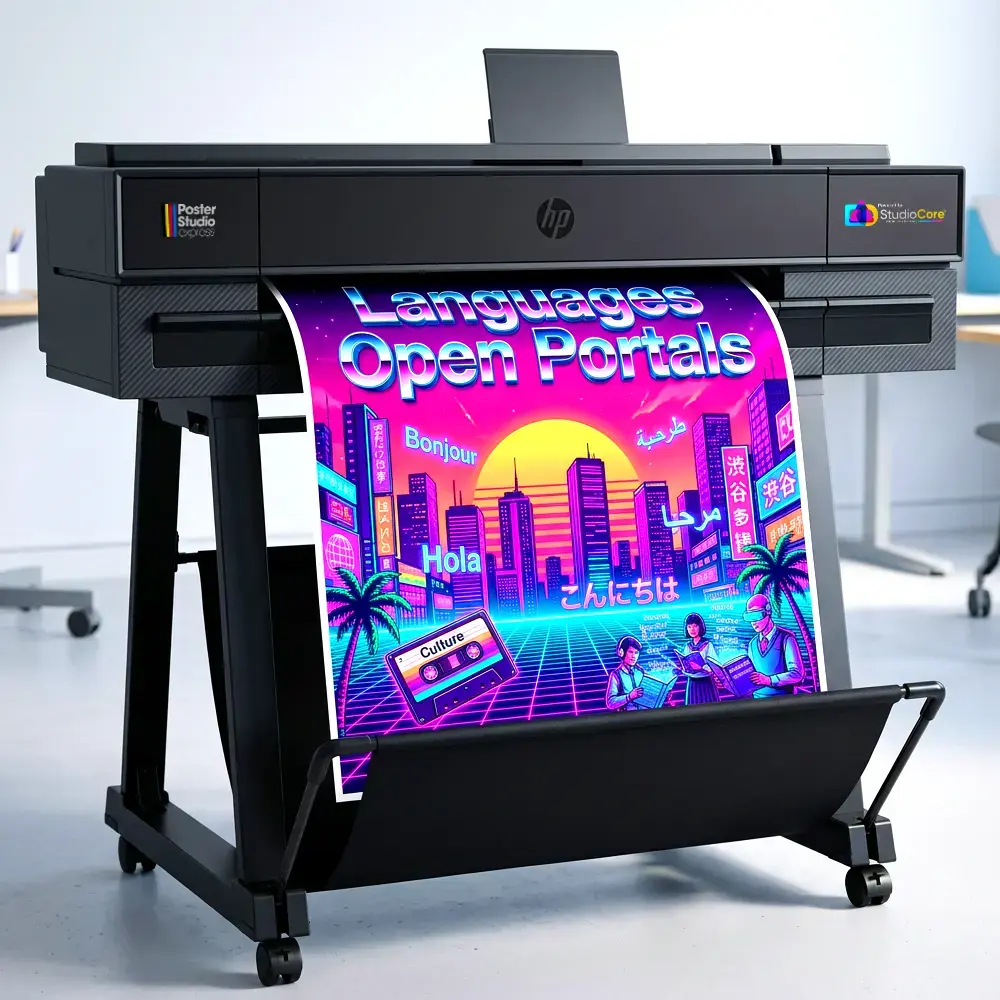
What to Look For in a Poster Printer Machine: Summer 2026 Edition

As the 2025–2026 academic year wraps up, district and site leaders are finalizing their LCAP and allocating LCFF, Title I, and one-time state grants for the fall. One of the most-requested capital purchases crossing approval desks right now is the in-house poster printer machine — and how you buy it matters as much as what you buy.
Sacramento mandates educational equity, rigorous A–G alignment, and comprehensive support for English Learners (ELs). Translating those policy mandates into classroom reality takes highly visible, engaging, and scaffolded instructional materials — and bringing visual production in-house is a highly effective way to get there.
But procuring this hardware takes strategic oversight. A troubling trend has emerged in the K-12 vendor space, one that threatens to drain consumable budgets and undercut the fiscal accountability required by state categorical funding frameworks.
The "White-Label" Bait and Switch
Many site leaders believe they are buying a purpose-built educational tool, only to discover they were sold a standard commercial poster printer machine in disguise. Certain vendors buy off-the-shelf commercial plotters, place a vinyl sticker over the manufacturer's logo, and bundle them with outdated consumer software like "Print Artist" — then market this piecemeal hardware as a "custom education system."
It isn't just deceptive marketing. It carries real consequences for your site's operating budget.
The Fiscal Drain: Maintenance Cartridges & Phantom Ink Waste
When you allocate Title I or LCFF supplemental funds, you have to show a direct return on investment for student outcomes. Commercial plotter hardware runs on mechanics built for daily architectural blueprinting — not the sporadic schedule of a high school media center.
To keep printheads from clogging during idle periods like winter break, spring break, or even a long weekend, many commercial plotters run aggressive automatic maintenance cycles. During those cycles, the machine purges perfectly good ink straight into a disposable "maintenance cartridge" (also called a maintenance box).
The Summer 2026 Procurement Checklist: Software Over Stickers
Site leaders should stop buying "printers with stickers" and start investing in curriculum delivery systems. To make sure your investment aligns with both state compliance metrics and daily teacher workflows, any wide-format system you evaluate this summer should clear these three criteria.
Zero maintenance cartridges
Unlike the relabeled plotters pushed by competitors, the Poster Studio Express Studio Series is engineered without maintenance cartridges — you only consume ink when you actually print. Paired with proprietary PrintCents™ Technology in the StudioCore software, the system calculates the exact cost of ink and paper before anyone hits print, holding your site to a predictable, industry-low operating cost starting at just $1.30 per poster. Get instant pricing for your district here.
Frictionless workflow — Web-To-Poster, not Print Artist
PLC time is sacred. Teachers don't have the bandwidth to design in outdated consumer software or troubleshoot complex print drivers. The proprietary Web-To-Poster feature bypasses the clunky operating-system print dialog entirely — whether a teacher is building a CTE Model Curriculum visual in Canva or an ELPAC vocabulary scaffold, the software intercepts the web design and formats it perfectly true-to-size. Zero wasted paper, zero IT tickets.
Instructional alignment — Scan-to-Poster AI
A compliant system delivers immediate instructional value. StudioCore ships with over 10,000 curriculum-aligned templates out of the box. And the Scan-to-Poster AI tool lets educators scan a standard 8.5×11 worksheet, rubric, or graphic organizer and use built-in AI upscaling to instantly generate a crystal-clear, 36-inch classroom anchor chart.
| Criteria | Generic "White-Label" Plotter Bundle | PSE Studio Series |
|---|---|---|
| Maintenance cartridges | Required | None |
| Automatic ink-purge cycles | Runs during idle periods | None |
| Phantom ink waste | ~15–20% of ink purged | Ink used only when you print |
| Starting cost per poster | Unpredictable / higher | From $1.30 with PrintCents™ |
| Design workflow | Outdated consumer software (e.g. Print Artist) | Web-To-Poster, true-to-size |
| Built-in templates | Minimal | 10,000+ curriculum-aligned |
| Worksheet → anchor chart | Manual rework | Scan-to-Poster AI upscaling |
Funding Roadmap: Braiding Your Budgets & the $750 Trade-In
A dedicated School Poster Maker doesn't require tapping unrestricted general funds. Because these systems directly impact student engagement and visual literacy, they're highly eligible for categorical funding, including:
- Title I (Part A): visual scaffolds for disadvantaged student groups.
- Perkins V: industry-standard visuals in CTE pathways.
- LCFF Supplemental / Concentration Grants: tools that explicitly support English Learners and foster positive school climate (PBIS visuals).
Immediate action item for Summer 2026: Did your school fall for the "sticker" bait-and-switch? Poster Studio Express is currently offering up to a $750 trade-in on existing, outdated, or broken generic printers — clear the ink-wasting tech out of your workroom and apply that credit toward a compliant, StudioCore-driven system.
Conclusion
As you map benchmark data to priority standards for the year ahead, make sure your teachers have the tools to make those standards visible. A generic, relabeled poster printer machine that burns ink on maintenance cycles is a standing fiscal liability; the Poster Studio Express Studio Series is a sustainable instructional asset.
Ready to build a compliant visual learning system into your Summer 2026 budget? Review funding alignment, schedule a StudioCore demo, and claim your $750 trade-in credit.
Contact Poster Studio Express