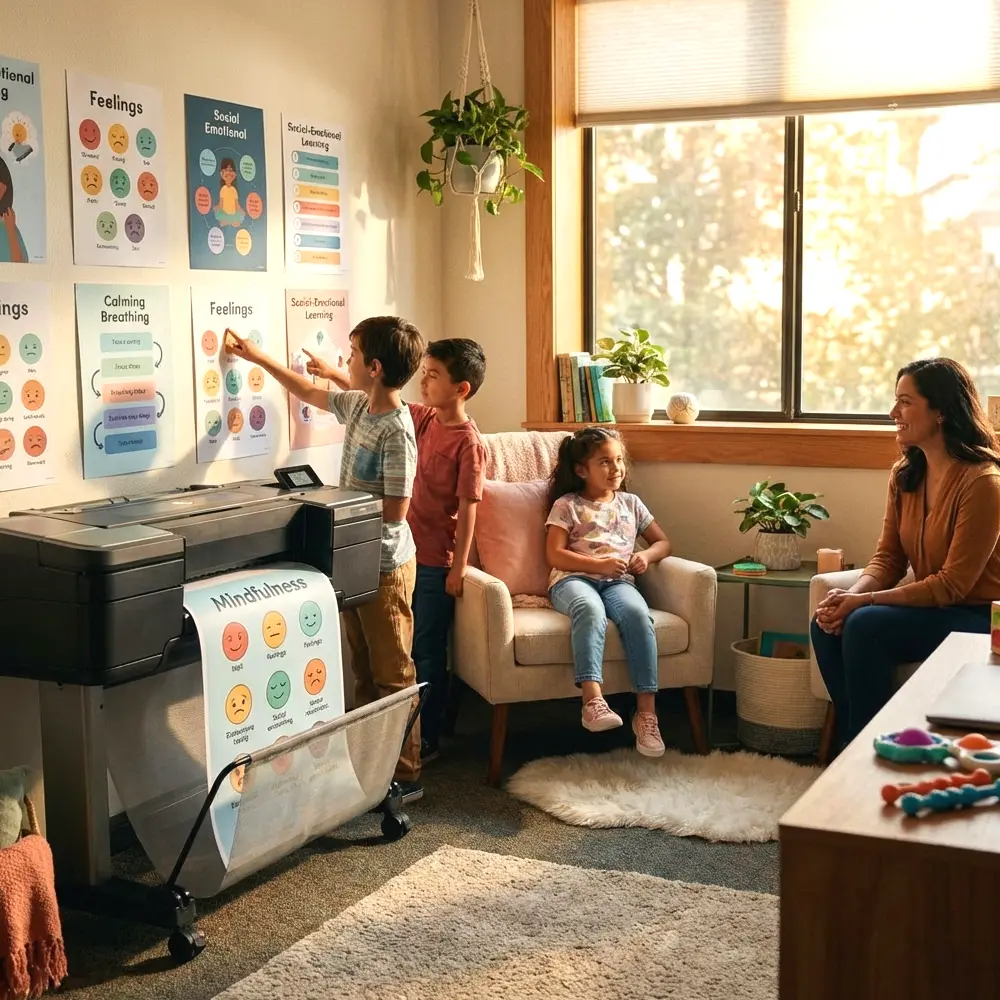









Yesterday, I watched in slow motion as a student’s backpack caught the corner of our “Growth Mindset” poster. Riiiiip. Three weeks of display time, and it was already showing battle scars. Sound familiar? After my first semester teaching middle school, I quickly learned that poster printer for schools laminating strategies can make or break your classroom displays.
Why Middle School Displays Need Extra Protection
Let’s be real—middle schoolers move through hallways like friendly tornadoes. They don’t mean to bump into displays, but between growth spurts and oversized backpacks, accidents happen. Research from the National Association of Secondary School Principals shows that middle school students navigate spaces differently than elementary kids. Their spatial awareness is still developing, which means your beautiful posters need armor!
I’ve discovered that investing in proper lamination isn’t just about aesthetics. It’s about creating learning environments that last. When you pair a quality Education Express 36 Poster Printer with smart laminating techniques, you’re setting yourself up for success all year long.

Choosing Your Laminating Warriors
Not all lamination is created equal, especially when you’re protecting posters from pre-teen energy levels. Through trial and error (emphasis on error!), I’ve learned which methods work best for different display locations.
Cold Lamination: Your Everyday Hero
For most classroom displays, cold lamination is your best friend. The PSE Cool 25″ Cold Laminator has saved countless posters in my room. Here’s why I love it:
- No heat means no waiting—perfect for those last-minute displays
- Safe for students to help with (hello, classroom jobs!)
- Works beautifully with prints from any poster printer for schools
- Preserves vibrant colors without the risk of heat damage
Pro tip: Cold lamination is especially great for posters printed on Coated Poster Paper. The chemical coating on this paper already provides some protection, and cold lamination adds that extra shield without compromising the print quality.
Hot Lamination: For High-Impact Zones
Some areas need serious protection. Think locker hallways, cafeteria entrances, or anywhere students congregate. For these spots, hot lamination creates a nearly indestructible barrier. However, it requires more equipment and safety precautions—definitely not a student helper task!
Strategic Placement Saves Lamination Costs
Here’s a money-saving secret: you don’t need to laminate everything. After tracking poster damage for a full semester, I created this placement strategy:
High-Risk Zones (Always Laminate)
- Hallway displays below 5 feet
- Near water fountains or sinks
- Cafeteria and gym entrances
- Anywhere within backpack-swinging range
Medium-Risk Areas (Selective Lamination)
- Upper wall displays in classrooms
- Library spaces with supervised traffic
- Computer lab walls
Low-Risk Spots (Often Skip Lamination)
- Ceiling-mounted displays
- Inside display cases
- Teacher-only areas
This approach has cut my laminating supply costs by 40% while still protecting the posters that need it most. Remember, the best poster maker machine produces beautiful prints, but smart protection strategies make them last.
Poster Printer for Schools Laminating: Quick-Change Systems
Middle school means constant content updates. Between unit changes, seasonal displays, and student work showcases, I’m switching posters monthly. Here’s my system for protecting frequently rotated content without breaking the bank:
The Sleeve Method
Instead of laminating individual posters, create reusable display sleeves. I use clear page protectors in poster sizes, sealed on three sides. Simply slide new prints in and out as needed. This works especially well for:
- Student work displays
- Weekly vocabulary posters
- Rotating subject-specific content
- Seasonal decorations
The Frame Game
Inexpensive poster frames from discount stores become protective shields. Unlike lamination, frames allow instant poster swaps while providing excellent protection. Position frames strategically in high-traffic areas where you need both durability and flexibility.
Material Matchmaking: Pairing Papers with Protection
Your choice of printing material affects your lamination needs. Through experimenting with my Education Express 24″ Poster Maker Package A, I’ve discovered these winning combinations:
For Permanent Displays
Print on heavyweight paper and invest in quality lamination. The 24lb Coated Paper takes lamination beautifully and creates museum-quality results that last years.
For Temporary Displays
Save money by printing on standard poster paper and using the sleeve method. Since these posters change frequently, heavy-duty protection isn’t cost-effective.
For Outdoor/Moisture-Prone Areas
Some papers are naturally water-resistant, reducing lamination needs. Ask about specialty media options when ordering your poster printer for schools—the right paper choice can eliminate lamination entirely for certain applications.
The Time-Saving Assembly Line
Laminating doesn’t have to eat your prep time. Here’s my Friday afternoon routine that protects a week’s worth of displays in under 30 minutes:
- Batch print all posters during lunch using the Lifetime Design Service templates
- Sort by size and protection needs while prints dry
- Pre-cut lamination film for standard sizes
- Run the assembly line: trim, position, laminate, trim again
- Label and store extras for future use
This system transformed laminating from a dreaded chore into a manageable task. Plus, having a stash of pre-laminated basics (number lines, alphabet strips, behavior charts) saves precious time during the school year.
Cost-Effective Strategies That Actually Work
Let’s talk dollars and sense. Quality lamination supplies aren’t cheap, but these strategies stretch your budget:
Buy in Bulk, Save Big
Partner with other teachers to order lamination film in bulk rolls. We split a case among four classrooms and saved 35% compared to retail prices.
Selective Lamination Schedules
Designate specific days for laminating to avoid waste. I laminate on Fridays only, which prevents those “just one poster” sessions that waste film scraps.
Reusable Display Systems
Invest once in quality frames, sleeves, or mounting systems. While the upfront cost is higher, you’ll save money long-term by protecting multiple poster rotations.
Troubleshooting Common Lamination Disasters
Even with the best poster maker machine and careful technique, lamination mishaps happen. Here’s how to fix common problems:
Bubbles and Wrinkles
Prevention beats correction. Always smooth from center outward, and use a lamination squeegee for best results. For stubborn bubbles, a tiny pin prick and firm pressure usually does the trick.
Curling Edges
This drives me crazy! Prevent curling by leaving a quarter-inch sealed border around all edges. If posters still curl, weigh them down overnight under heavy books.
Cloudy or Hazy Finish
Usually caused by incompatible materials or incorrect temperature settings. Stick with recommended lamination films for your method, and always test new material combinations on small pieces first.
Looking Ahead: Sustainable Protection Practices
As educators, we’re increasingly mindful of environmental impact. Here’s how I’m making poster protection more sustainable:
- Choose reusable protection methods when possible
- Properly recycle laminated materials (check local guidelines)
- Invest in quality materials that last longer
- Share protection resources among classrooms
The 5 Year Next Business Day Warranties on poster printer systems show that durability matters. Apply that same long-term thinking to your display protection strategies.
Your Next Steps: Try It Tomorrow Checklist
Ready to revolutionize your display protection game? Start with these three actions:
- ✓ Audit your current displays: Walk your room and identify which posters need protection most urgently
- ✓ Test one new technique: Try the sleeve method with this week’s vocabulary posters
- ✓ Calculate your savings: Track how much you spend on reprinting damaged posters versus protection supplies
Remember, effective lamination isn’t about protecting everything—it’s about strategic choices that maximize your time, budget, and sanity. Your students (and your posters) will thank you!
Have a lamination tip that’s saved your displays? Drop a comment below or check out more Customer Stories from REAL Customers to see how other teachers are protecting their classroom investments. Together, we’re building bomb-proof displays one poster at a time! 🎨💪