







Creating Visual Systems That Make Flexible Seating Actually Work
Picture this: You walk into my classroom on a Tuesday morning, and instead of chaos, you see six-year-olds quietly choosing their learning spots, checking visual guides, and settling in with purpose. How did we get here? The magic happened when I discovered how a poster print machine flexible seating system could transform student choice into student responsibility.
After three months of trial and error (and yes, a few tears), I’ve cracked the code on making flexible seating work for first graders. Spoiler alert: it’s all about the visuals.
Try It Tomorrow Checklist:
- Print one simple choice chart
- Create visual seating expectations
- Design a self-reflection tool
Why Visual Systems Are Essential for Flexible Seating Success
When I first introduced flexible seating, it was… well, flexible chaos. Students argued over spots, forgot expectations, and I spent more time managing seating than teaching. Then I remembered something from my student teaching: young learners process visual information 60,000 times faster than text (3M Corporation Visual Research).
That’s when I turned to our school’s Education Express 24″ Poster Maker Package A. Within a week, I’d created a complete visual system that transformed our classroom dynamic.
The Science Behind Visual Learning in Classroom Management
Research from the University of Minnesota shows that visual aids improve learning by up to 400% (University of Minnesota, 2019). For flexible seating, this means clear visual guides don’t just help—they’re essential.
Here’s what I’ve learned works best:
- Choice becomes intentional when students can see their options
- Expectations stick through consistent visual reminders
- Self-reflection deepens with visual tracking tools
Designing Your Poster Print Machine Flexible Seating Choice Charts
The cornerstone of our system is the seating choice chart. Using poster printers for schools makes this process incredibly efficient—what used to take hours of cutting and laminating now takes minutes.
Essential Elements of Effective Choice Charts
After testing various designs, I’ve found these components are non-negotiable:
- Real photos of each seating option (not clipart—actual classroom photos)
- Simple icons showing how many students fit at each spot
- Color coding for different work types (quiet work = blue, partner work = green)
- Velcro name tags so students can physically claim their spots
Pro tip: Print your charts on Coated Poster Paper for durability. Mine have survived sticky fingers, spilled juice boxes, and enthusiastic first-grade pointing for months!
Creating Expectation Posters That Students Actually Follow
Here’s where many flexible seating classrooms falter—unclear expectations. Students need to know exactly what “good choices” look like at each seating option.
Poster Print Machine Flexible Seating Expectation Templates
For each seating area, I created a poster showing:
- Voice level (using our school-wide voice level chart)
- Body position (illustrated with student photos)
- Materials placement (where supplies go)
- Transition expectations (how to leave the space)
The game-changer? Using our Lifetime Design Service. I sent rough sketches, and their human designer created professional-looking posters that perfectly matched our classroom aesthetic.
Self-Reflection Tools: Building Student Ownership
The real magic happens when students start self-monitoring. Research from CASEL shows that self-reflection activities improve emotional regulation by 23% in elementary students (CASEL, 2022).
Weekly Reflection Posters
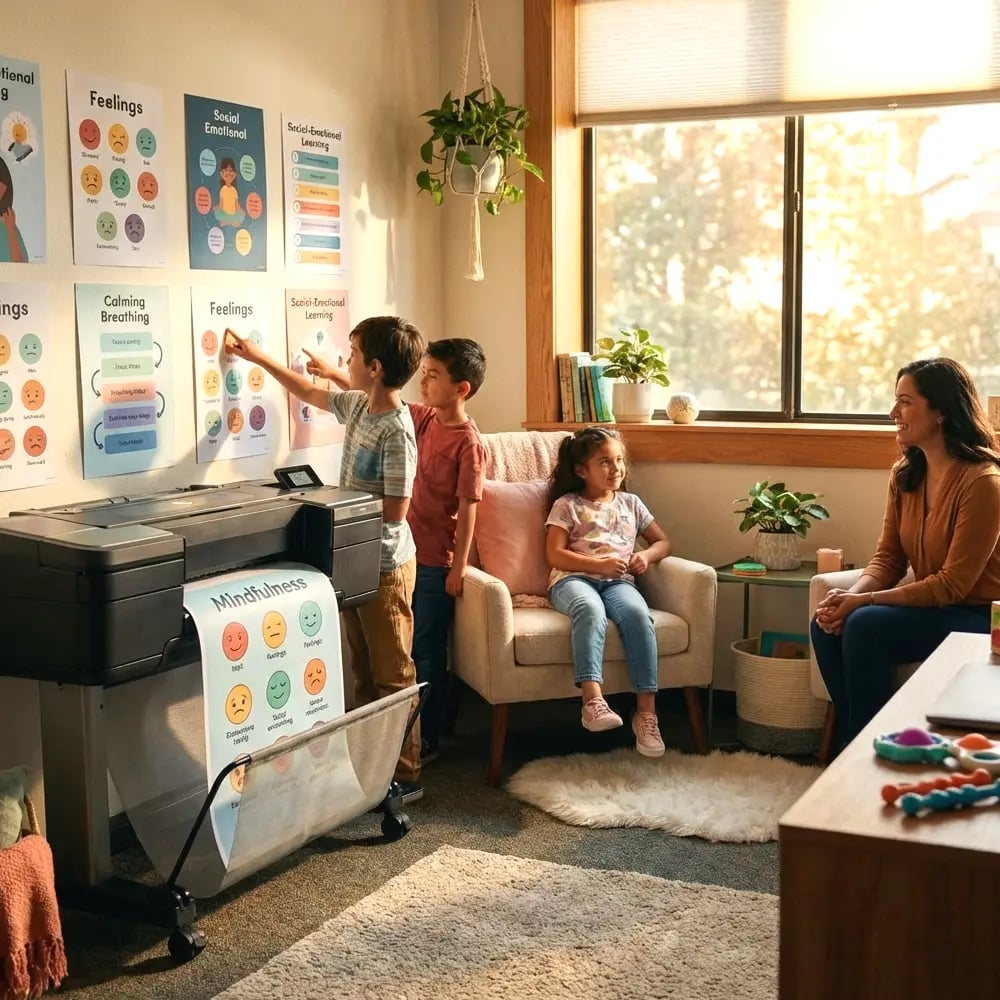
Every Friday, students use our reflection station featuring:
- Emoji rating scales for comfort, focus, and productivity
- Simple bar graphs where students add stickers to track preferred spots
- “Next week I will try…” commitment cards
These visual tools help even my emerging readers participate fully in reflection activities.
Implementation Timeline: From Chaos to Calm
Based on my experience, here’s a realistic timeline for implementing visual systems:
Weeks 1-2: Foundation Building
- Introduce one choice chart with 3-4 options
- Practice using the chart during morning work only
- Display clear expectation posters at each location
Week 3-4: Expanding Choices
- Add more seating options to your chart
- Introduce self-reflection tools
- Begin using the system for multiple subjects
Week 5-6: Student Leadership
- Assign “seating helpers” to manage the choice chart
- Let students help design new expectation posters
- Celebrate successful self-reflection with visual displays
Troubleshooting Common Challenges with Visual Solutions
Even with great visuals, challenges arise. Here’s how I’ve solved the most common ones:
1st Challenge: Popular Spots Fill Up Fast
Visual Solution: Create a “fairness wheel” that rotates daily, showing which table group gets first choice. Students can see at a glance when their turn comes.
2nd Challenge: Students Forget Expectations
Visual Solution: Design portable reminder cards using your poster print machine. Students who struggle can keep a personal visual reminder at their chosen spot.
3rd Challenge: Transitions Take Forever
Visual Solution: Post transition posters showing exactly how to clean up each area. Include numbered steps with photos.
Making It Sustainable: Tips for Long-Term Success
After a full semester, here’s what keeps our system running smoothly:
- Monthly visual updates: Refresh one element each month to maintain engagement
- Student input: Let kids help design new posters—ownership increases compliance
- Consistent placement: Keep visuals at child eye-level (about 3 feet high)
- Lamination station: Protect high-touch items with our PSE Cool 25″ Cold Laminator
Measuring Success: Data-Driven Visual Tracking
How do you know if your visual systems are working? Track these metrics:
- Transition time: We went from 8-minute transitions to 3 minutes
- Seating disputes: Dropped from 5-6 daily to 1-2 weekly
- On-task behavior: Increased by 34% (measured through observation)
- Student satisfaction: 92% report feeling “happy” or “very happy” with seating choices
Create a simple visual data wall where students can see class progress. Nothing motivates first graders like watching a bar graph grow!
Beyond Basic: Advanced Visual Systems
Once your foundation is solid, consider these enhancements:
QR Code Integration
Add QR codes to seating areas that link to:
- Calming music playlists for quiet spots
- Movement break videos for active areas
- Digital choice boards for fast finishers
Multilingual Support
With 30% of my students speaking Spanish at home, I create bilingual expectation posters. Our poster printers for schools make it easy to print multiple versions quickly.
Seasonal Updates
Keep engagement high by updating visuals seasonally. Winter theme? Add snowflakes to choice charts. Spring? Flowers mark each seating area.
Getting Started: Your Visual System Action Plan
Ready to transform your flexible seating classroom? Here’s your step-by-step plan:
- Assess your current setup: What’s working? What’s chaotic?
- Choose your first visual tool: Start with either a choice chart OR expectation posters
- Design with students in mind: Use real photos, simple text, bright colors
- Print professionally: Quality matters for materials used 180 days a year
- Introduce gradually: One new visual element per week maximum
- Gather feedback: Ask students what helps them most
- Iterate and improve: No system is perfect on day one
Ready to Create Your Visual Flexible Seating System?
Transform your classroom management with professional-quality visual guides. Our team at Poster Studio Express is here to help!
Or call us at 866-788-7900 to discuss your visual system needs.
Final Thoughts: The Power of Visual Systems
Three months ago, flexible seating felt like an impossible dream. Today, my first graders manage their learning spaces with more maturity than some middle schoolers I’ve observed. The difference? Clear, consistent, student-friendly visual systems.
Remember, effective classroom management isn’t about control—it’s about clarity. When students can see their choices, understand expectations, and track their growth, magic happens. They become partners in creating a learning environment that works for everyone.
Your poster print machine flexible seating journey starts with one simple visual. Which one will you create first?