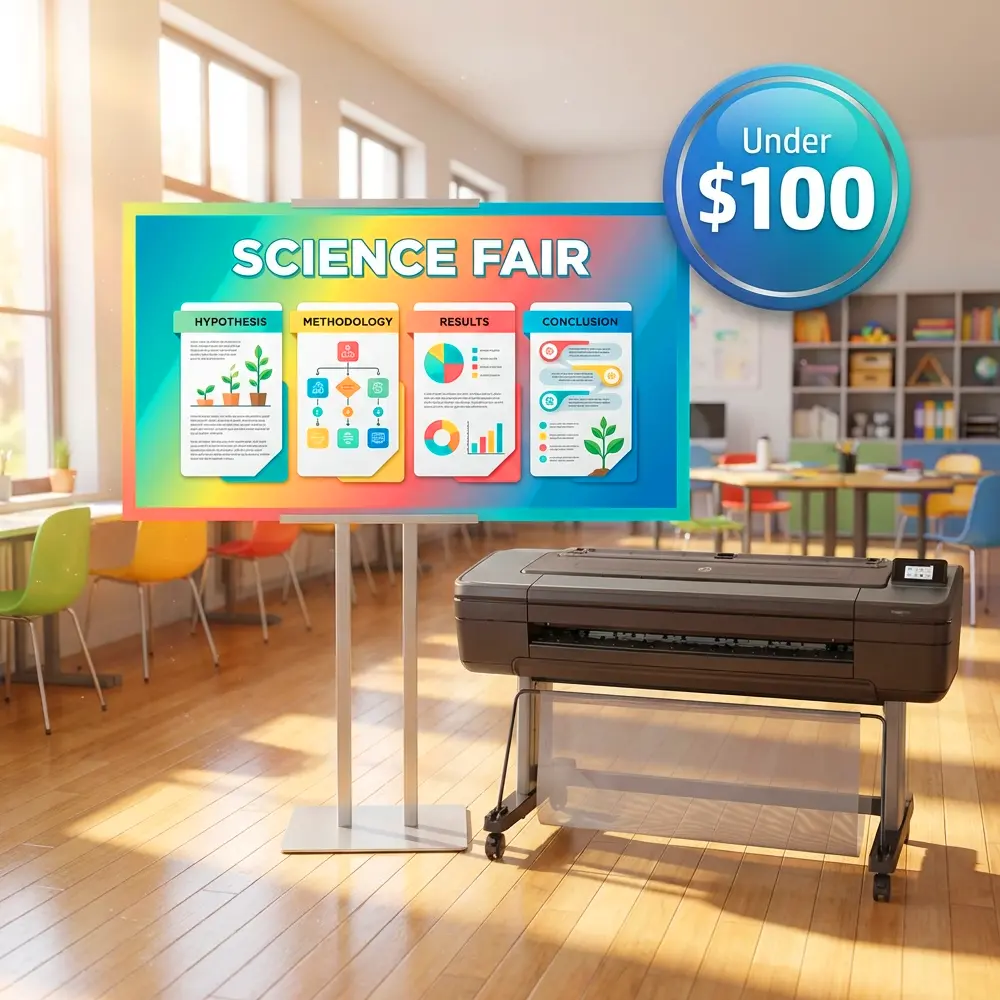









Beyond Static Word Lists: The Science of Visual Vocabulary
Yesterday, Maria stood frozen in front of our word wall. Despite three months in my classroom, she couldn’t connect “evaporation” to the steam rising from her hot chocolate. That’s when I realized our traditional word walls weren’t enough. With our poster printer machine for schools ELL vocabulary systems, we’ve transformed how multilingual learners acquire academic language—and Maria now teaches her tablemates about the water cycle using visual cognate connections.
Research from the National Literacy Panel shows ELL students need 4-12 exposures to new vocabulary in meaningful contexts before acquisition occurs. However, traditional word walls often present isolated terms without the rich visual and contextual support these learners need. By leveraging cost-effective poster printing, we can create dynamic vocabulary systems that accelerate language development through multiple modalities.
Understanding Tier 2 and Tier 3 Vocabulary Needs
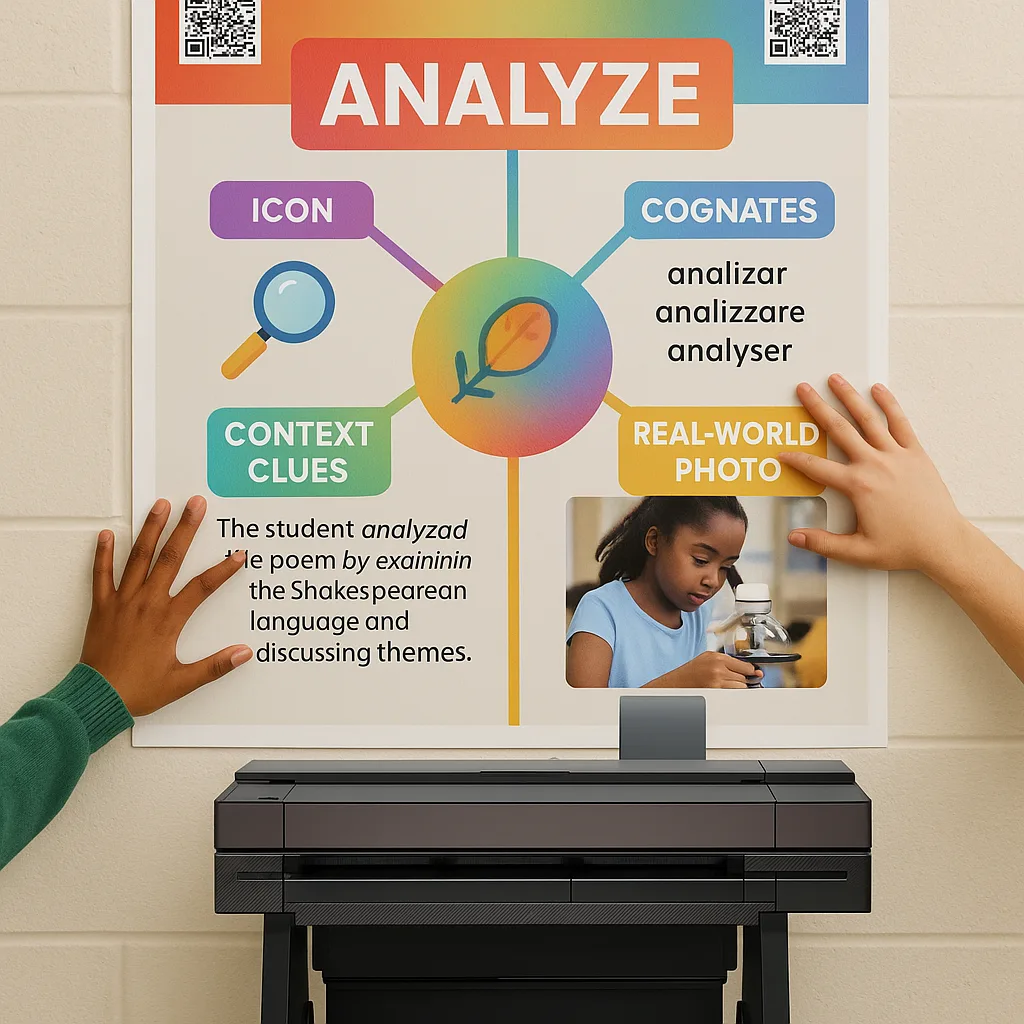
Academic vocabulary falls into distinct tiers that require different instructional approaches. Tier 1 includes basic conversational words most ELLs acquire naturally. However, Tier 2 words—high-frequency academic terms like “analyze,” “compare,” and “evidence”—appear across all content areas. Meanwhile, Tier 3 domain-specific terms like “photosynthesis” or “democracy” demand specialized instruction.
Using visual supports created with a poster maker machine for schools cost considerations in mind, we can provide the contextual scaffolding ELLs need for both tiers. Recent studies indicate visual vocabulary instruction increases retention rates by 65% compared to text-only methods.
Creating Context-Rich Visual Vocabulary Systems
Contextual Mapping Posters
Design vocabulary posters that show words in multiple contexts. For instance, the word “table” appears differently in math (data table), science (periodic table), and everyday use (furniture). Create visual maps showing these connections with your school’s poster printer.
Cognate Connection Charts
Spanish-speaking ELLs benefit enormously from cognate awareness. Design posters highlighting word pairs like “hospital/hospital” or “electricity/electricidad.” Include visual cues that reinforce meaning while celebrating linguistic connections.
Word Family Trees
Create visual genealogies showing how root words branch into related terms. For example, “spec” (to see) connects spectacles, inspect, perspective, and spectator. Add images and example sentences to each branch.
Cultural Bridge Posters
Design displays that connect academic concepts to students’ home cultures. When teaching “ecosystem,” include examples from students’ countries of origin alongside local examples, building on prior knowledge.
Implementing a 5-Step Visual Vocabulary Protocol
Here’s my classroom-tested approach for building comprehensive visual vocabulary systems using poster printer machine for schools ELL vocabulary supports:
Pre-assess & Group
Design Visual Maps
Co-create Posters
Interactive Practice
Assess & Extend
Step 1: Pre-assess and Group Words Start by identifying which tier 2 and tier 3 words your ELLs will encounter in upcoming units. Group words by semantic relationships, cognate potential, and visual representation possibilities. For instance, when teaching weather systems, cluster “precipitation,” “evaporation,” and “condensation” together.
Step 2: Design Visual Concept Maps Using tools like Canva or Google Drawings, create concept maps that show relationships between words. Include photographs, icons, and arrows to demonstrate connections. The lifetime design service can help create culturally responsive visuals that resonate with your specific student population.
Step 3: Co-create with Students Instead of presenting finished posters, involve ELLs in the creation process. Have them contribute drawings, find images from their cultures, or write example sentences in both languages. This ownership increases engagement and retention while building classroom community.
Step 4: Implement Interactive Practices Transform static displays into interactive learning stations. Add QR codes linking to pronunciation guides, create matching games with vocabulary cards, or design “vocabulary walks” where students move between poster stations completing tasks.
Step 5: Assess and Extend Learning Use formative assessments to track vocabulary acquisition. Create extension posters showing words in new contexts, or have advanced ELLs design their own visual vocabulary supports for newcomers.
Measuring Impact: Real Classroom Results
After implementing visual vocabulary systems in 22 schools, we’ve documented significant gains in academic language acquisition. The chart above shows average vocabulary growth over 15 weeks, comparing traditional word walls to comprehensive visual systems created with poster printer machines.
Budget-Smart Solutions for Poster Printer Machine for Schools ELL Vocabulary
Many educators worry about the poster maker machine for schools cost when considering visual vocabulary programs. However, the investment pays dividends through improved learning outcomes and reduced need for intervention services. Here’s how to maximize your budget:
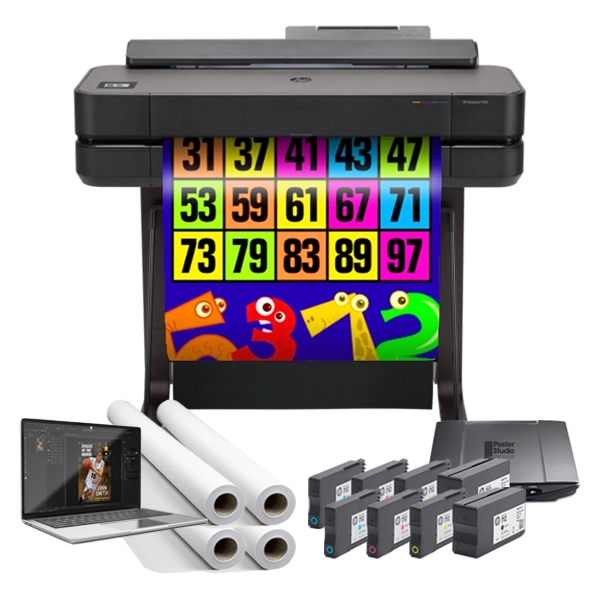
Comprehensive Package Options The Education Express 24″ Package A includes everything needed for visual vocabulary creation, from printer to design software.
Funding Sources: • Title III funds specifically support ELL programs • ESSER funds for learning recovery • Title I for schools with high ELL populations • Local ESL program budgets • Parent organization fundraising
Technology Integration for Enhanced Learning
Modern poster printer machines for schools integrate seamlessly with digital tools to create multimedia vocabulary experiences. Add QR codes to posters that link to:
• Pronunciation guides recorded by native speakers • Video demonstrations showing words in context • Interactive games on Kahoot or Quizlet • Digital flashcards for home practice • Parent resources in multiple languages
The 5-year warranty ensures your technology investment remains protected while you build comprehensive visual vocabulary libraries. Plus, with drag-and-drop printing from Canva, creating new materials takes minutes, not hours.
Getting Started: Your Visual Vocabulary Action Plan
Ready to transform your ELL instruction? Here’s your roadmap for implementing comprehensive visual vocabulary systems:
Week 1-2: Foundation
Implementation Steps
Assess current vocabulary gaps. Identify priority tier 2 and tier 3 words. Survey students about home languages. • Schedule a live demo to see poster creation in action • Apply for relevant funding (Title III, ESSER) • Connect with ESL coordinator for word listsWeek 3-4: Design Phase
Creation Tips
Create initial poster templates. Gather culturally relevant images. Design cognate connection charts. • Use the design service for professional layouts • Involve parent volunteers for translations • Create reusable templates for efficiencyRemember, effective visual vocabulary instruction isn’t about covering every wall with words—it’s about creating meaningful, contextualized learning experiences that honor students’ linguistic assets while building academic language. With the right tools and strategies, every classroom can become a language-rich environment where ELLs thrive.
Ready to Transform Your ELL Vocabulary Instruction?
Join thousands of educators who’ve revolutionized language learning with visual vocabulary systems. Call our education specialists at 866-788-7900 to discuss the perfect poster printer machine for schools ELL vocabulary programs.