





School Poster Maker for Data Walls That Motivate Students

Educators across California face a persistent challenge: how to display student achievement data that motivates learners without creating harmful comparisons. As districts implement data-driven instruction mandates, the traditional “star chart” approach no longer aligns with our understanding of growth mindset and social-emotional learning. The solution lies in reimagining how we create and display achievement data using a teacher poster maker data walls approach that celebrates individual progress.
The Evolution of Classroom Data Displays
Data walls have transformed dramatically since the No Child Left Behind era. Research from the California Department of Education’s Reading/Language Arts Framework emphasizes that effective data displays must support all learners, including English learners and students with diverse needs. This shift requires educators to move beyond comparative charts toward growth-focused visualizations.
Traditional achievement displays often featured public rankings, color-coded performance levels, and comparative metrics that inadvertently created anxiety and competition. These approaches, while well-intentioned, can undermine student confidence and create fixed mindset beliefs about ability. Modern educational psychology tells us that motivation comes from recognizing progress, not from comparing oneself to peers.
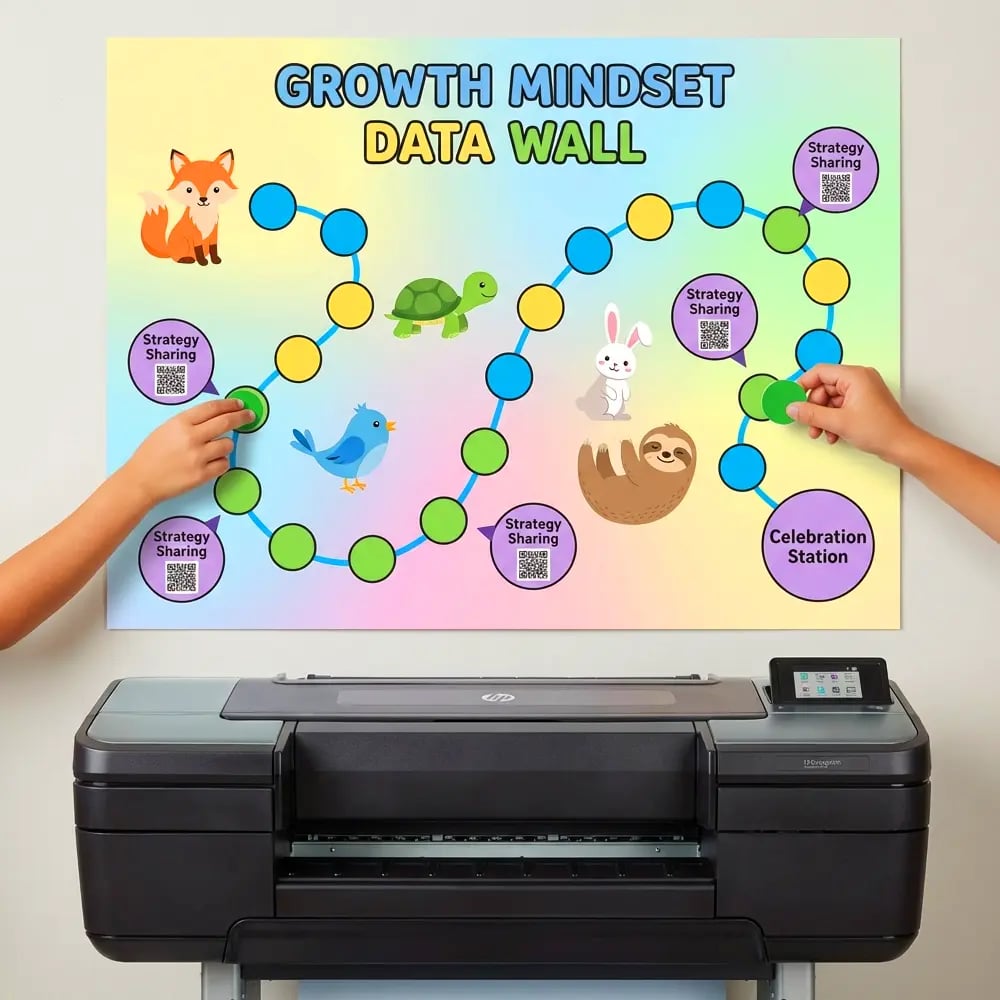
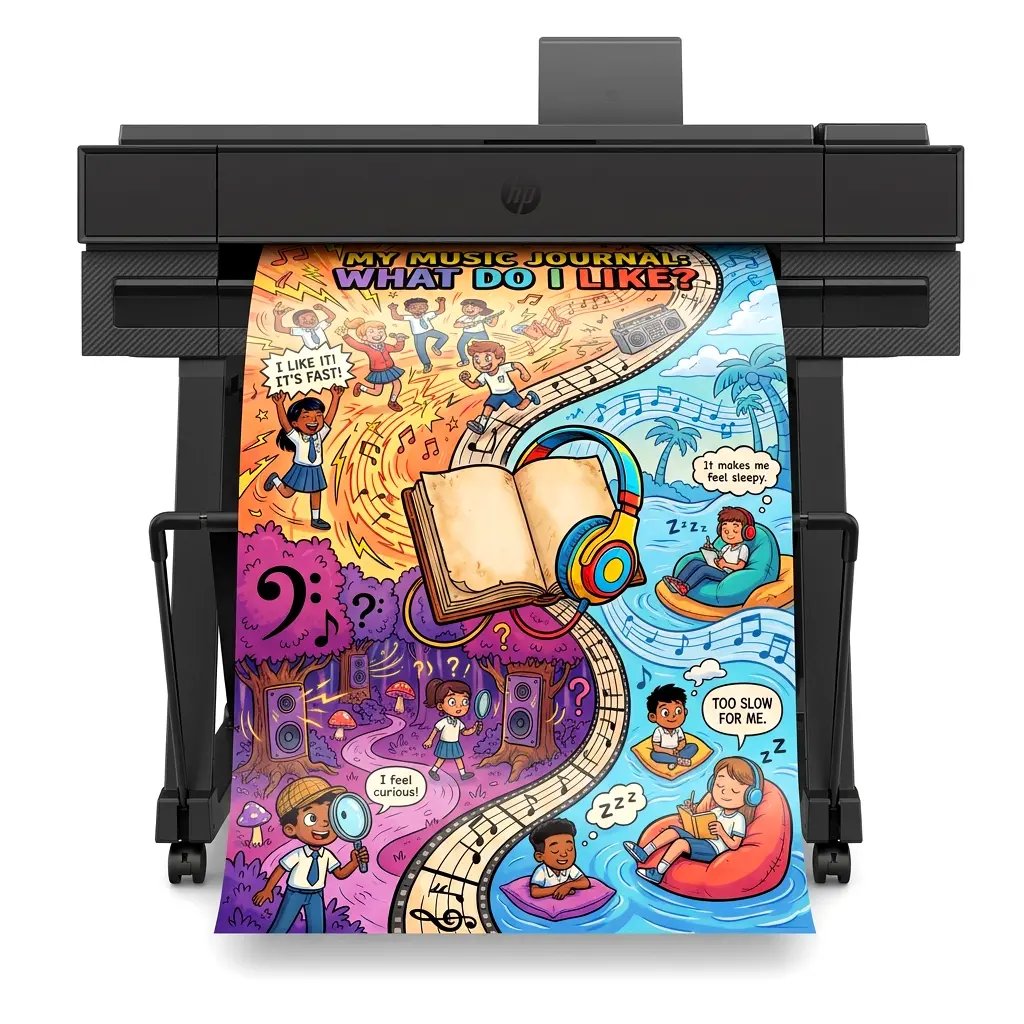
A colorful growth mindset data wall printed with a school poster maker encourages student motivation and participation.
The challenge intensifies when considering California’s diverse student population. According to 2023 California enrollment data, our classrooms serve students from over 60 language backgrounds, with varying cultural perspectives on public recognition and achievement. This diversity demands thoughtful approaches to data visualization that respect individual journeys while maintaining high expectations for all learners.
Understanding the Privacy-Progress Balance
Federal regulations, including FERPA, require careful consideration of what student data can be publicly displayed. California Education Code Section 49073.6 provides additional protections for student privacy. However, these regulations don’t prevent meaningful data displays—they simply require more creative approaches to visualization.
Effective data walls serve multiple purposes: they inform instruction, celebrate growth, and create accountability. The key lies in designing displays that achieve these goals without compromising student dignity or privacy. This balance becomes achievable when using poster printing for teachers tools that allow for quick updates and personalized elements.
Creating Anonymous Progress Trackers
One successful strategy involves using student-selected avatars or symbols instead of names. Students choose their identifier at the beginning of the year, maintaining ownership while preserving privacy. These systems work particularly well when combined with individual goal-setting conferences where students help design their own progress indicators.
For example, a fifth-grade teacher in Fresno Unified created a “Reading Journey” wall where each student selected a hiking trail avatar. Progress markers showed movement along individualized paths toward personal goals, not comparative destinations. The visual metaphor reinforced that everyone travels at their own pace while moving forward.
Implementing Growth-Focused Teacher Poster Maker Data Walls
The transformation from comparison-based to growth-focused displays requires both philosophical shifts and practical tools. A quality Education Express 24″ Poster Maker Package A enables educators to create dynamic, updateable displays that reflect current student progress without the permanence of traditional bulletin boards.
Growth-focused displays share several key characteristics. First, they emphasize progress over proficiency, showing movement rather than static achievement levels. Second, they incorporate student voice and choice in how progress is represented. Third, they celebrate effort and strategy use alongside outcomes. Finally, they provide clear next steps rather than just current status.
Consider this framework for designing motivational data displays:
- Individual Baselines: Each student’s progress is measured against their own starting point, not grade-level benchmarks
- Multiple Metrics: Include effort indicators, strategy use, and process goals alongside academic outcomes
- Student Ownership: Learners help design and update their own progress markers
- Celebration Zones: Highlight breakthrough moments and “aha” experiences, not just test scores
- Strategy Sharing: Feature successful approaches students used to overcome challenges
Practical Templates for Growth Mindset Displays
Implementing these principles requires concrete templates and examples. The Lifetime Design Service can help create customized templates, but here are foundational designs that work across grade levels:
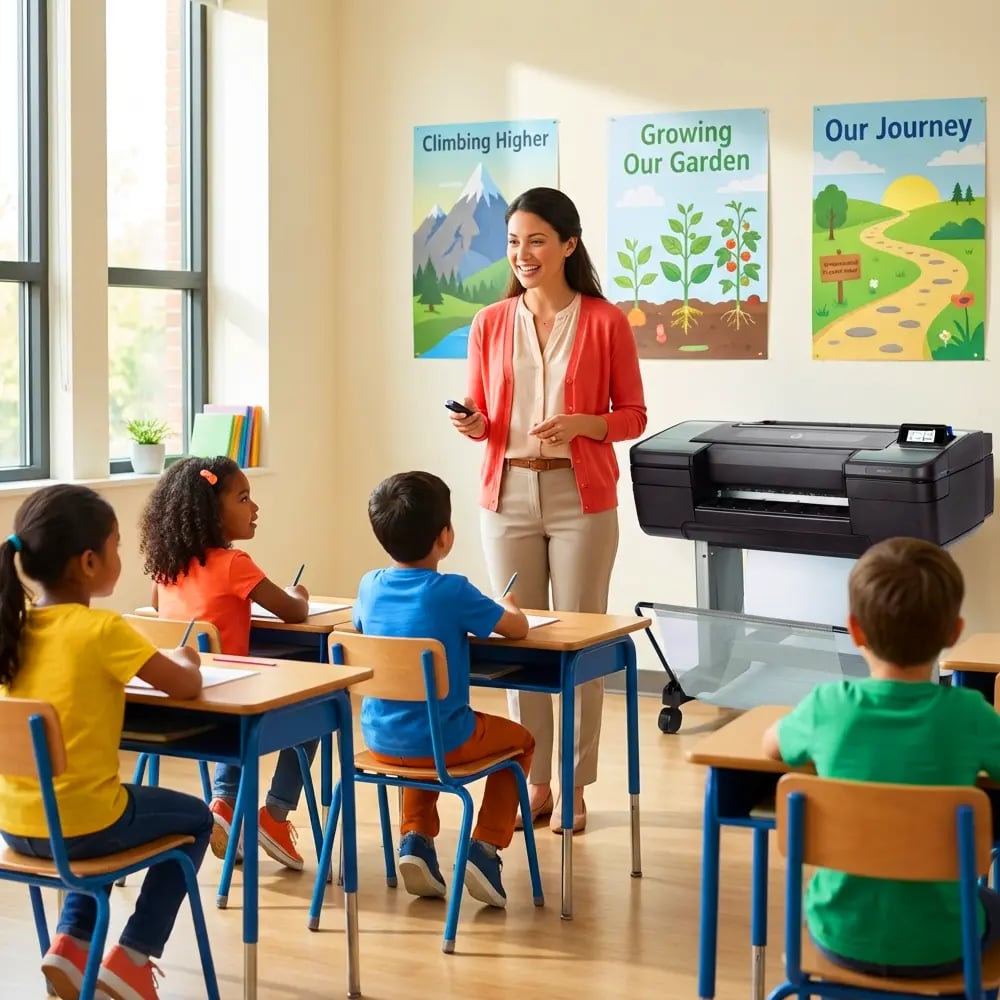
The Learning Mountain Template: Students place markers on personalized mountain paths, with different peaks representing individual goals. Side paths show strategy exploration, and rest stops celebrate consolidation periods. This metaphor normalizes the non-linear nature of learning while maintaining forward momentum.
Garden of Growth Display: Each student tends a unique plant that grows based on effort and progress. Roots represent foundational skills, stems show current work, and blooms celebrate achievements. This organic metaphor reinforces that growth requires time, care, and individual conditions.
Journey Maps: Students create personalized learning maps with destinations they choose. Progress markers show movement toward goals, with celebration stations for milestones. Detours and scenic routes normalize different learning paths while maintaining purposeful direction.
Technology Integration for Dynamic Displays
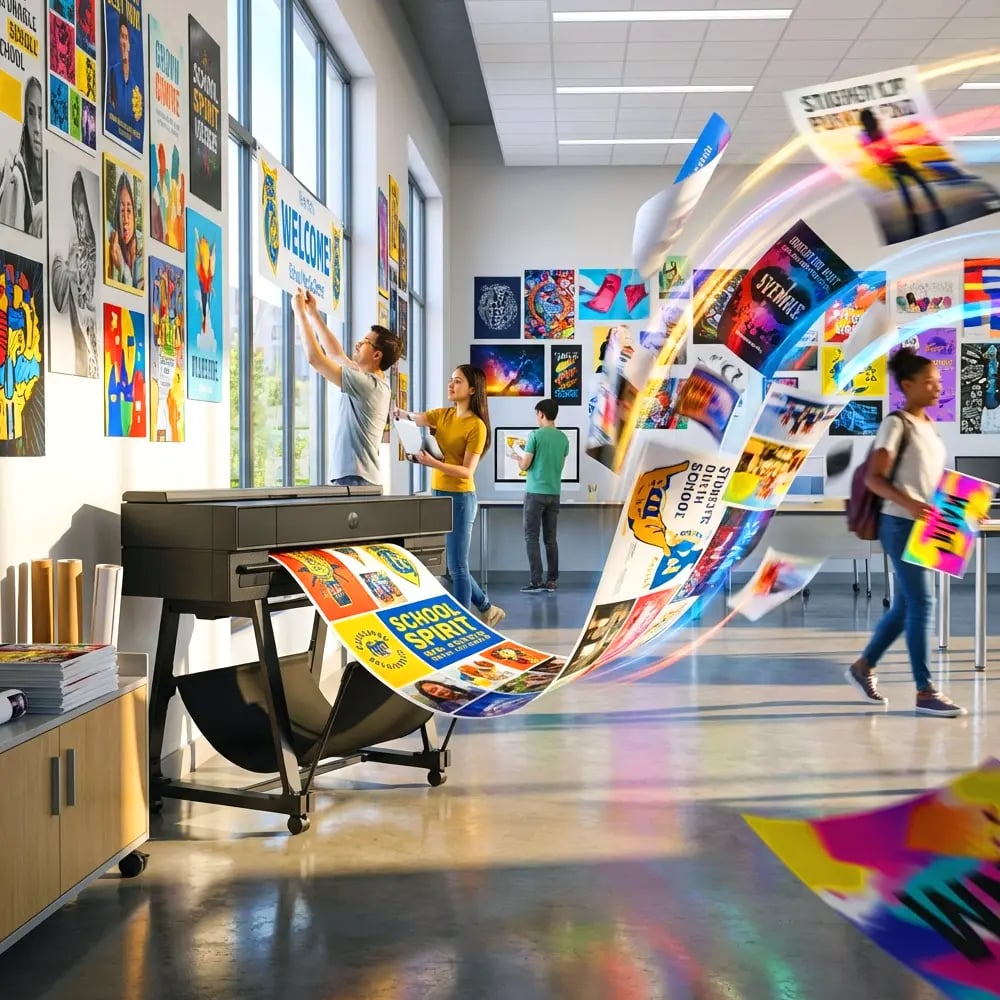
Modern poster printing for teachers solutions enable frequent updates that keep displays current and relevant. The ability to print large-format materials in-house transforms static bulletin boards into dynamic learning environments. This flexibility proves essential for maintaining student engagement and reflecting real-time progress.
Digital integration enhances physical displays through QR codes linking to student portfolios, video reflections, or interactive goal-setting tools. These hybrid approaches respect privacy while providing rich documentation of learning journeys. Students can scan codes to access their personal dashboards, maintaining individual data while contributing to collective classroom culture.
The Satin Photo Paper works exceptionally well for creating durable, updateable progress cards that students can manipulate. Its instant-dry properties allow for immediate display updates during student conferences, reinforcing the connection between effort and visible progress.
Addressing Common Implementation Challenges
Transitioning to growth-focused displays often encounters predictable challenges. Parents accustomed to traditional achievement displays may question the new approach. Clear communication about the research supporting growth mindset practices helps build understanding. Sharing examples of how individual progress tracking actually provides more meaningful information than comparative rankings often converts skeptics.
Time constraints present another challenge. However, investing in efficient display systems actually saves time long-term. A teacher poster maker data walls system that allows for quick updates during planning periods proves more sustainable than elaborate hand-created displays requiring weekend work.
Some educators worry that removing competition eliminates motivation. Research suggests the opposite: intrinsic motivation flourishes when students compete against their own previous performance rather than peers. The key lies in maintaining high expectations while individualizing the path to meet them.
Culturally Responsive Data Displays
California’s diverse communities bring varied cultural perspectives on achievement, recognition, and public display. Some cultures emphasize collective success over individual achievement, while others may view public progress tracking as inappropriate. Effective data walls respect these differences while maintaining educational purpose.
Strategies for cultural responsiveness include:
- Offering choice in display participation levels
- Including collective class goals alongside individual progress
- Incorporating culturally relevant progress metaphors
- Providing private progress tracking options for sensitive students
- Celebrating diverse definitions of success and growth
The Demo Video showcases how schools create culturally responsive displays that honor all learners while maintaining academic rigor.
Assessment Integration Strategies
Effective data walls connect directly to classroom assessment practices. They should reflect both formative and summative data, emphasizing the learning process over final products. This integration requires thoughtful planning and flexible display systems.
Consider using poster printing for teachers to create modular assessment walls with removable components. Students can physically move their progress markers during self-assessment activities, creating kinesthetic connections to abstract concepts. This hands-on approach particularly benefits tactile learners and younger students.
Regular “data talks” where students analyze their own progress patterns develop metacognitive skills. These conversations, supported by visual displays, help learners identify effective strategies and areas needing attention. The focus remains on growth patterns rather than comparative performance.
Supporting Struggling Learners Through Visual Progress
Students experiencing academic challenges often benefit most from growth-focused displays. Seeing concrete evidence of progress, however incremental, builds resilience and maintains motivation. The key lies in calibrating displays to show meaningful progress for all learners.
Microgoal tracking proves particularly effective for struggling students. Breaking larger objectives into visible steps creates frequent success opportunities. A Education Studio 24″ Poster Maker Package A+ enables creation of detailed progress ladders showing these incremental achievements.
Peer mentorship programs gain effectiveness when supported by appropriate visual displays. Pairing students for mutual support, with shared progress tracking, builds community while maintaining individual accountability. These partnerships work best when both students contribute unique strengths.
Future Directions for Achievement Displays
Educational data visualization continues evolving as we deepen understanding of motivation and learning. Emerging trends include increased student agency in display design, integration with digital portfolios, and emphasis on competency-based progression rather than time-based advancement.
California’s recent emphasis on Universal Design for Learning (UDL) principles influences data display practices. Future displays will likely incorporate multiple means of representation, allowing students to demonstrate progress through varied modalities. This evolution demands flexible display systems capable of accommodating diverse expression forms.
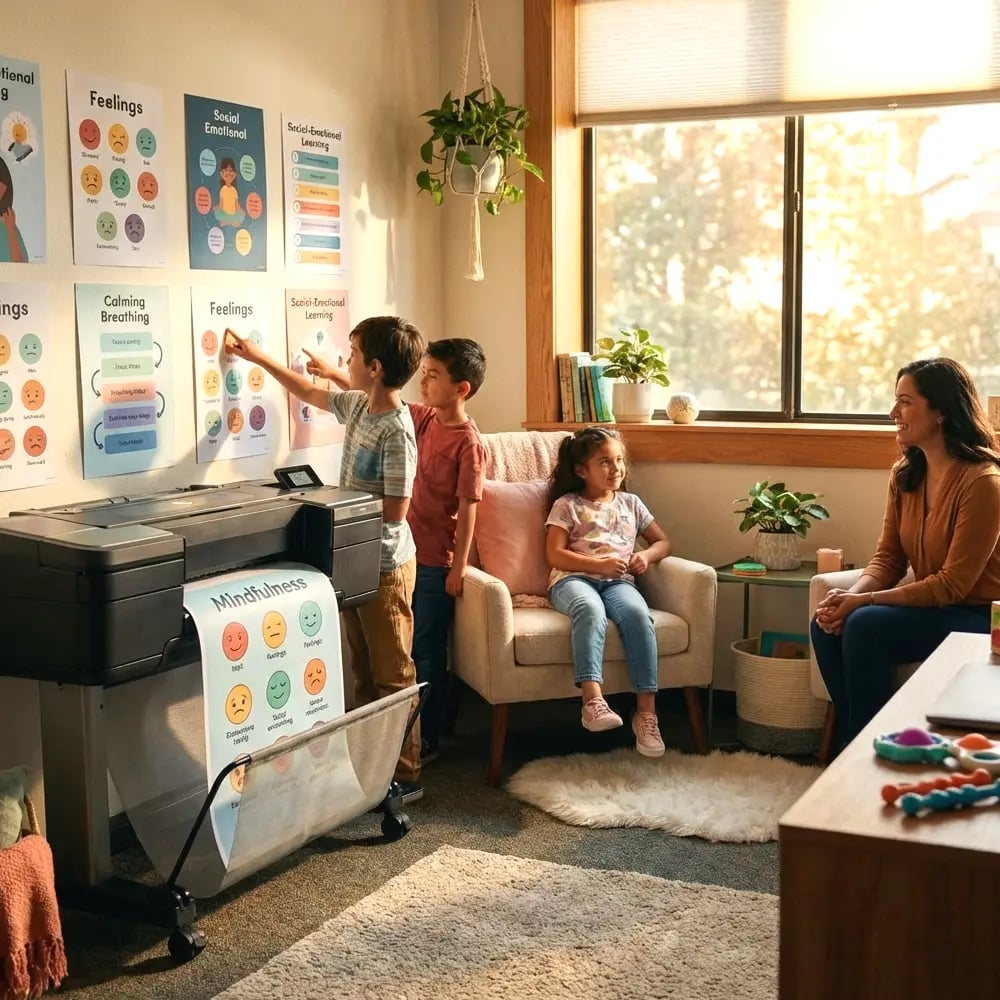
The integration of social-emotional learning competencies into academic displays represents another frontier. Visualizing growth in self-management, relationship skills, and responsible decision-making alongside traditional academic metrics provides a holistic view of student development.
Implementation Checklist for Educators
Successfully transforming classroom data displays requires systematic planning. This checklist guides implementation:
- Audit Current Displays: Evaluate existing data walls for comparison elements and privacy concerns
- Gather Student Input: Survey learners about motivating display elements and privacy preferences
- Design Templates: Create growth-focused templates aligned with your specific context
- Establish Routines: Build regular update cycles into classroom schedules
- Communicate Purpose: Share the “why” behind new approaches with students and families
- Monitor Impact: Regularly assess how displays affect student motivation and behavior
- Iterate Design: Refine displays based on student feedback and observed outcomes
The journey toward motivational, growth-focused data displays requires both philosophical commitment and practical tools. By centering student dignity while maintaining high expectations, educators create environments where all learners thrive. The investment in thoughtful display design pays dividends in student engagement, self-efficacy, and academic growth.
Resources for Continued Learning
Professional development around data display practices continues evolving. The FAQ section addresses common technical questions about creating and maintaining displays. Additionally, connecting with other educators implementing growth-focused approaches provides valuable insights and inspiration.
Remember that transforming data displays is an iterative process. Start with one small change, observe its impact, and build from there. The goal isn’t perfection but progress—modeling for students the very growth mindset we seek to instill. With the right tools and approach, every classroom can feature data displays that motivate, inspire, and honor the learning journey of each student.