





Poster Makers for Effective Reading Intervention Centers

Picture this: Maria, a second-grader who started the year reading at kindergarten level, now confidently decodes multisyllabic words. Her secret? A thoughtfully designed literacy intervention center powered by strategic visual supports. This transformation isn’t unique – it’s happening in reading labs across the country where teachers are discovering how a poster machine reading intervention approach can revolutionize small-group instruction.
The Evidence Behind Visual Intervention Spaces
Recent data from reading specialists implementing visual intervention centers shows remarkable results. Schools using systematic poster displays for word work report a 40% improvement in sight word recognition within just 12 weeks. These aren’t fancy, expensive setups – they’re DIY stations created with a poster making machine and strategic planning.
Dr. Sarah Chen’s research at Michigan State University tracked 150 struggling readers across 15 elementary schools. Students in classrooms with dedicated visual intervention spaces showed significantly higher gains in both decoding accuracy and reading fluency compared to traditional intervention settings. The key? Consistent, high-quality visual supports that students could reference independently during guided reading and word work activities.
Building Your Poster Machine Reading Intervention Center
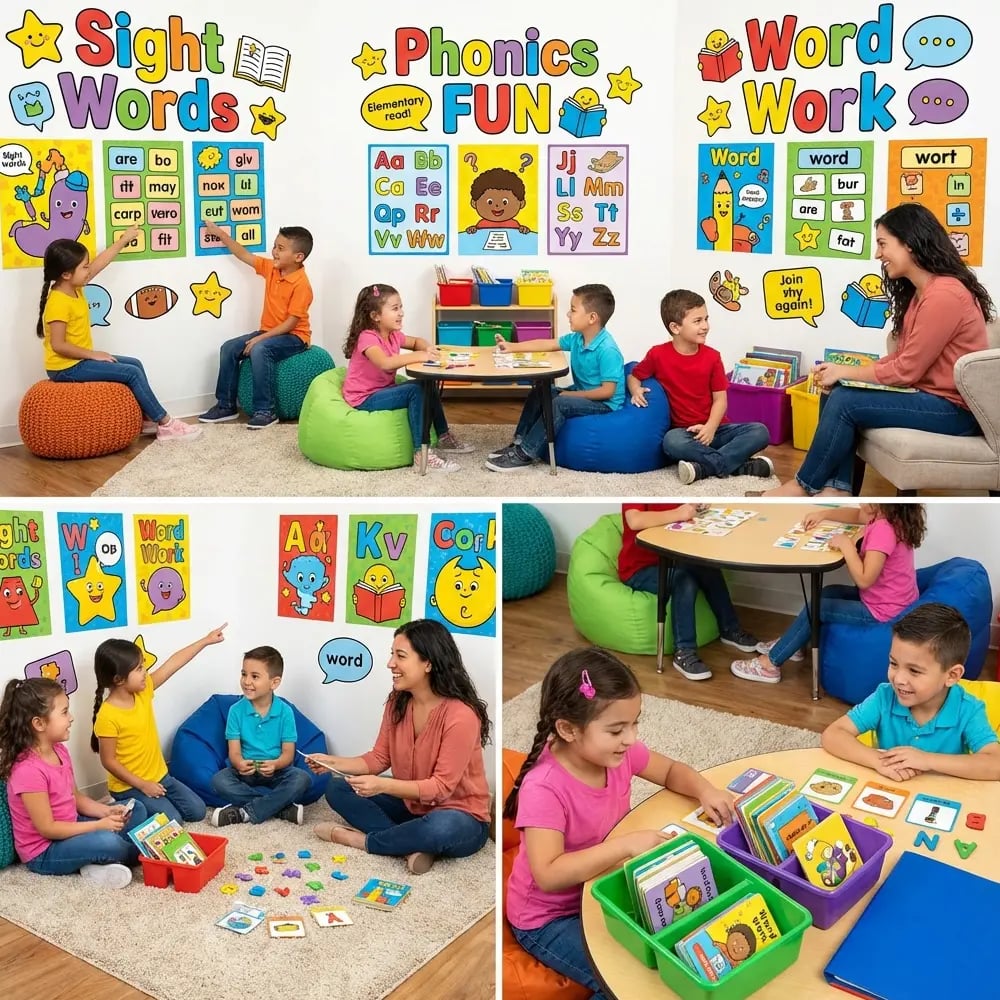
Transform any corner of your classroom into a powerful literacy lab with these essential components – all achievable for under $500 when you leverage in-house poster creation.
Word Work Station Components
Rotating Phonics Wheels Design circular posters divided into sections for different phonics patterns. Students physically turn a center arrow to practice targeted skills. Print these on durable coated poster paper for daily manipulation.
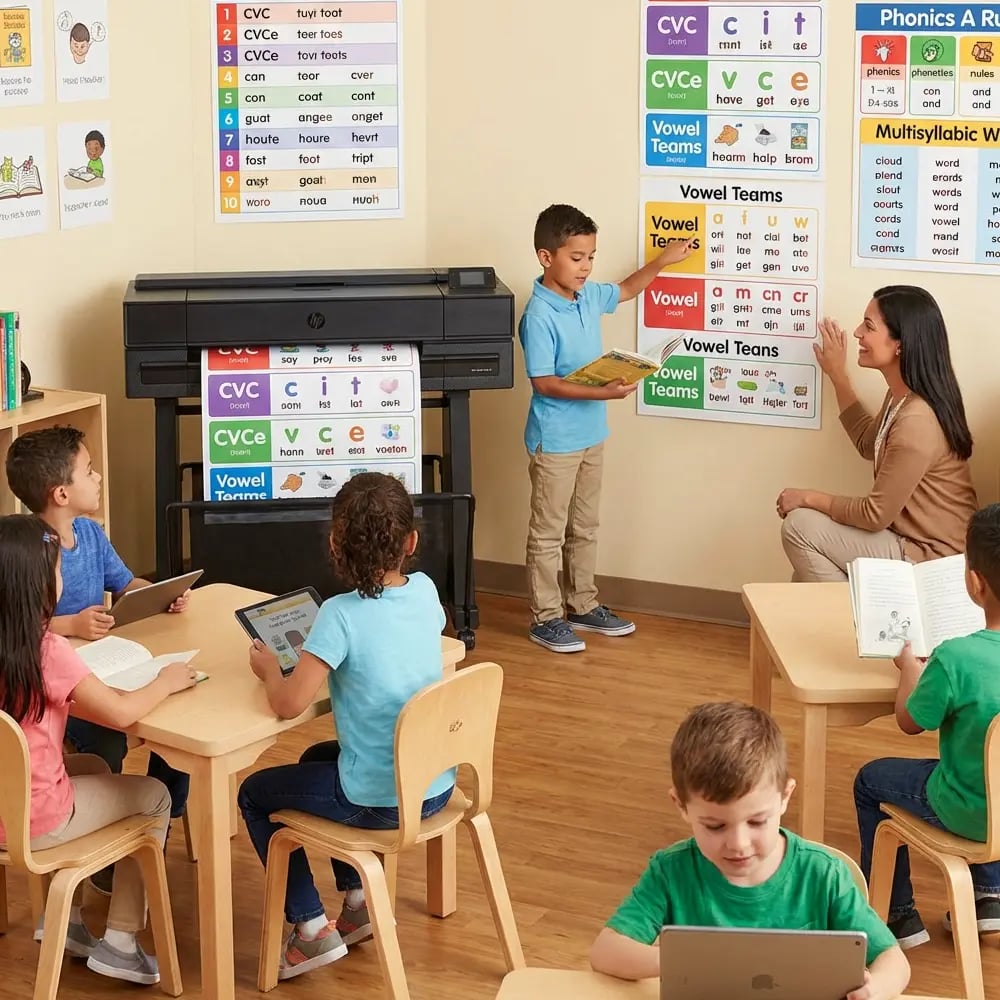
Sound Wall Progression Charts Create sequential posters showing phoneme progression from simple CVC patterns to complex multisyllabic words. Each poster builds on the previous skill, creating a visual pathway for student mastery.
Interactive Blend Boards Design posters with velcro strips where students can physically move letter cards to create different word combinations. This kinesthetic approach reinforces phonemic awareness while building decoding skills.
Fluency Tracking Systems
Individual Progress Thermometers Create personalized fluency trackers showing words-per-minute goals. Students color in their progress weekly, creating powerful visual motivation. The lifetime design service can help customize these for your specific grade-level benchmarks.
Classroom Data Walls Design anonymous class-wide tracking posters showing overall fluency trends. Use color-coding to celebrate growth rather than comparing individual scores. This builds community while maintaining privacy.
Passage Difficulty Ladders Create visual representations of text complexity levels. Students can see their progression from Level A to Level Z texts, understanding that reading growth is a journey with clear milestones.
Managing Multiple Intervention Groups
The real magic happens when you coordinate multiple small groups using your visual intervention center. Here’s how successful reading specialists structure their rotations:
Station 1: Independent Word Work Students interact with the phonics wheels and blend boards you’ve created. Because these materials are self-explanatory and visually engaging, minimal teacher supervision is needed. The poster machine allows you to quickly update these materials as students progress through different phonics patterns.
Station 2: Fluency Practice Corner Partners read passages while tracking progress on their personal thermometers. Large-format timing charts help students self-monitor their reading rate. Consider creating QR code posters linking to audio models for independent practice.
Station 3: Teacher-Led Guided Reading While you work intensively with one group, other students engage meaningfully with the visual supports at their stations. This is where your investment in quality poster materials pays dividends – students stay on-task because the activities are clear and engaging.
Station 4: Progress Gallery Students update their personal achievement boards, adding stars for mastered sight words or completed books. This self-assessment builds metacognitive skills while maintaining engagement.
Budget-Friendly Implementation Strategy
Initial Poster Materials 20 sheets of durable paper for core intervention displays
Organization Supplies Pocket charts, velcro, markers, and storage solutions
Assessment Tools Timers, clipboards, and progress monitoring materials
Maximizing Your Investment
The beauty of using a poster making machine for your intervention center lies in its adaptability. Unlike pre-made commercial materials that quickly become outdated, you can modify your displays based on real-time student data. Here’s how to maximize your investment:
Weekly Updates Dedicate 30 minutes each Friday to updating progress charts and creating new word work materials for the following week. The cost per print is so low that frequent updates are financially feasible.
Student Ownership Involve students in creating their own progress posters. This builds investment while teaching data analysis skills. Many teachers report that student-created visuals are more motivating than teacher-made ones.
Parent Communication Create take-home versions of your intervention materials. Parents appreciate having the same visual supports at home, creating consistency between school and home practice. The Education Studio package makes it easy to print multiple copies for family engagement.
Professional Development Use your intervention center as a model for grade-level colleagues. The visual nature of the space makes it easy to explain your methods during team meetings or coaching cycles.
Troubleshooting Common Challenges
Every intervention program faces obstacles. Here’s how visual supports help overcome the most common challenges:
Limited Space? Create foldable poster stations that can be stored flat when not in use. Tri-fold displays work perfectly for small classrooms or shared spaces.
Multiple Grade Levels? Use color-coding to differentiate materials by reading level. Students quickly learn which color corresponds to their current goals, enabling multi-age intervention groups.
Behavior Management? Post clear visual expectations at each station. Students respond better to consistent visual reminders than repeated verbal directions. Include positive behavior tracking charts to celebrate on-task behavior.
Time Constraints? Pre-print a month’s worth of materials during planning time. Store them in labeled folders for quick access. The efficiency of having materials ready eliminates transition time between groups.
Quick Setup Checklist
Transform Your Intervention Space
Real Results From Real Classrooms
The data speaks for itself. Schools implementing comprehensive visual intervention centers report:
Ready to Transform Your Reading Intervention?
Every day without proper visual supports is a missed opportunity for struggling readers. Your students deserve an intervention space that engages, motivates, and accelerates their progress. With the right poster making machine and our proven implementation strategies, you can build a literacy lab that transforms reading outcomes.
Join thousands of reading specialists who’ve revolutionized their intervention programs with strategic visual supports.