







Homework Station Success: Organization Posters for Home Learning Spaces
Remember that frantic Monday morning when your student couldn’t find their math homework, and you scrambled to help them recreate a study schedule that somehow vanished into the homework folder abyss? Trust me, after countless mornings of searching for missing assignment sheets and watching families struggle with home learning organization, I’ve discovered that visual supports can turn homework chaos into calm productivity. With a poster maker machine designed for homework stations, families can create customized organization tools that actually stick – both literally on the wall and figuratively in students’ routines.
Creating Effective Homework Station Posters with a Poster Maker Machine
The magic of transforming a cluttered kitchen table into a productive learning space starts with intentional visual design. Research from the National Association of Elementary School Principals shows that students with organized homework spaces complete assignments 23% faster and with fewer errors. When families invest in a poster maker machine for homework stations, they’re not just decorating walls – they’re building executive function skills that last a lifetime.
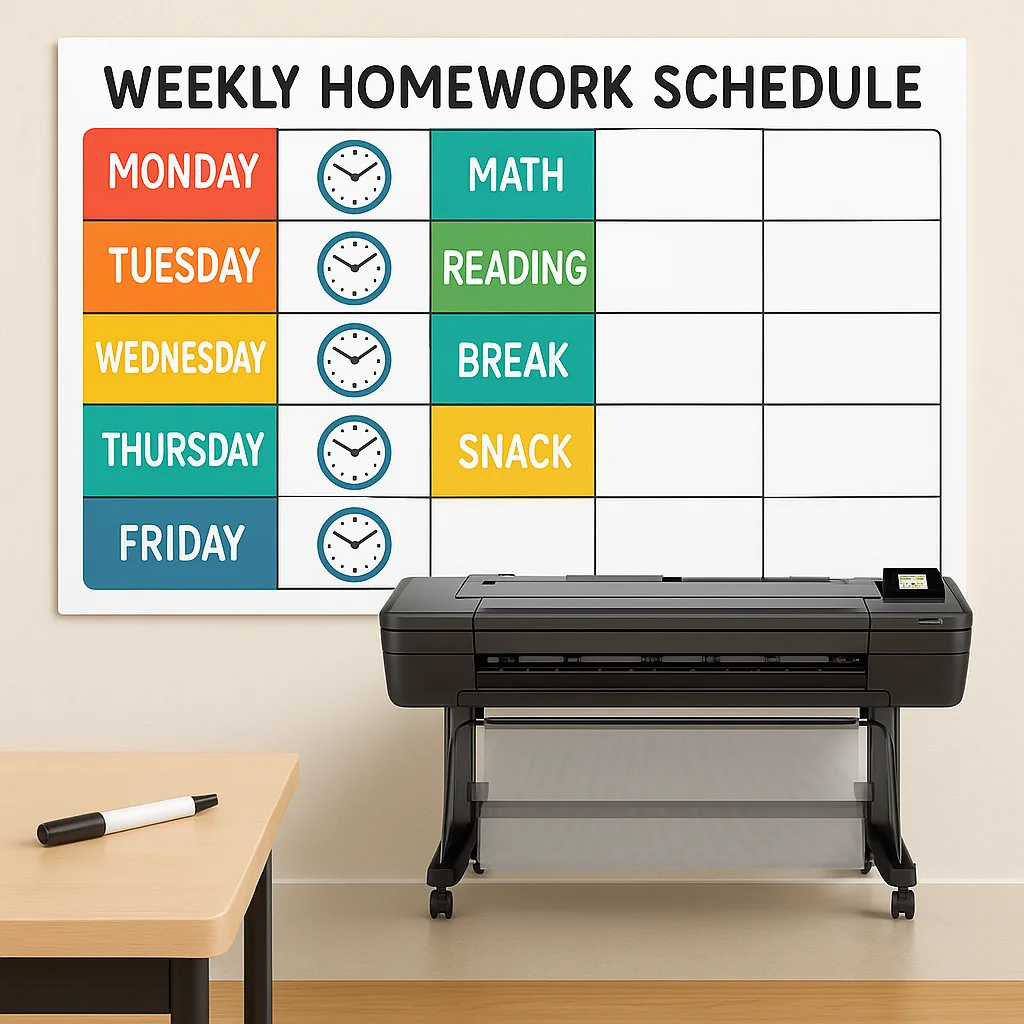
Consider starting with these essential poster components that every homework station needs. First, create a weekly schedule template that’s large enough to see from across the room. Using Education Express 24″ Poster Maker Package A, you can design colorful time blocks that help students visualize their after-school routine. Include spaces for subjects, break times, and even snack reminders because let’s face it – hungry kids aren’t productive kids!
Next, develop a supplies checklist poster that prevents the dreaded “I can’t find my calculator” meltdown. Research indicates that students waste an average of 15 minutes per homework session searching for materials. By creating a visual inventory with checkboxes, you’re teaching organizational skills while ensuring everything has its place.
Essential Design Elements for Home Learning Success
Visual Schedule Templates That Actually Work
Creating schedules that students will actually use requires understanding how young minds process information. According to child development research from Yale University, elementary students respond best to visual schedules that combine colors, icons, and minimal text. Start by dividing your poster into clear time blocks using Coated Poster Paper that can handle repeated use with dry-erase markers.
For younger students, incorporate picture symbols alongside text. A clock icon next to “Math Time 4:00-4:30” helps pre-readers understand their routine independently. Middle schoolers benefit from color-coding by subject – blue for math, green for science, yellow for language arts. This visual system reduces cognitive load and helps students transition between tasks more smoothly.
Remember to build in flexibility. Life happens, soccer practice runs late, and sometimes math homework takes longer than expected. Design your schedule poster with moveable components or leave blank spaces for daily adjustments. This teaches adaptability while maintaining structure.
Supply Organization Visuals
The most effective supply checklist posters go beyond simple lists. Create visual zones on your poster that mirror the physical organization of the homework station. If pencils live in the blue cup on the left side of the desk, show a blue cup icon on the left side of your poster. This spatial matching helps students develop muscle memory for finding supplies quickly.
Include a “refill reminder” section on your supply poster. When students check off that they’re down to their last glue stick or running low on notebook paper, parents get a visual cue to restock before crisis hits. This proactive approach prevents homework interruptions and teaches students to plan ahead.
Designing Resources Parents and Students Love
Understanding Different Learning Styles
Every child processes information differently, and your homework station posters should reflect this diversity. Visual learners thrive with color-coded systems and picture-heavy designs. Kinesthetic learners benefit from interactive elements like lift-the-flap sections or velcro components they can physically move. Auditory learners might need QR codes that link to recorded instructions or study tips they can listen to while organizing.
A banner printing machine offers the flexibility to create multiple versions of organizational tools, allowing families to experiment with what works best. Some students need minimal, calm designs with plenty of white space, while others engage better with bright, busy layouts that capture their attention.
Consider creating a “study tips library” poster that offers different strategies for different subjects. Math might include visual problem-solving steps, while reading comprehension could feature graphic organizers. By providing options, you empower students to discover their own learning preferences.
Age-Appropriate Organization Systems
First-graders need vastly different organizational support than fifth-graders. For younger students, focus on simple, picture-based systems with no more than 3-4 elements per poster. A homework routine poster might show: backpack picture → snack picture → homework picture → play picture. This sequential visual helps them understand the flow of their afternoon.
Upper elementary students can handle more complex organizational systems. Create subject-specific reference posters that include study strategies, common formulas, or writing checklists. A Education Studio 24″ Poster Maker Package A+ allows for detailed, professional-quality prints that can include everything from multiplication tables to grammar rules.
Middle schoolers benefit from project planning posters that break down long-term assignments. Include sections for brainstorming, research deadlines, rough draft dates, and final due dates. This visual project management teaches crucial skills they’ll use throughout their academic career.
Building Independence Through Visual Supports
Self-Monitoring Tools
The ultimate goal of any homework station is fostering independence. Create self-assessment posters that help students evaluate their own progress. Include prompts like “Did I check my work?” or “Is my handwriting neat?” with smiley face ratings they can circle. This metacognitive practice builds self-awareness and quality control skills.
Develop a “problem-solving flowchart” poster for when students get stuck. Start with “Read the directions again,” then branch to “Look at examples in my notes,” followed by “Ask for help.” This visual decision tree empowers students to work through challenges independently before seeking assistance.
Time management visuals also promote independence. Create a poster showing common homework tasks with typical time estimates. When students see that math problems usually take 20 minutes, they can better plan their afternoon and recognize when they might be rushing or procrastinating.
Celebration and Progress Tracking
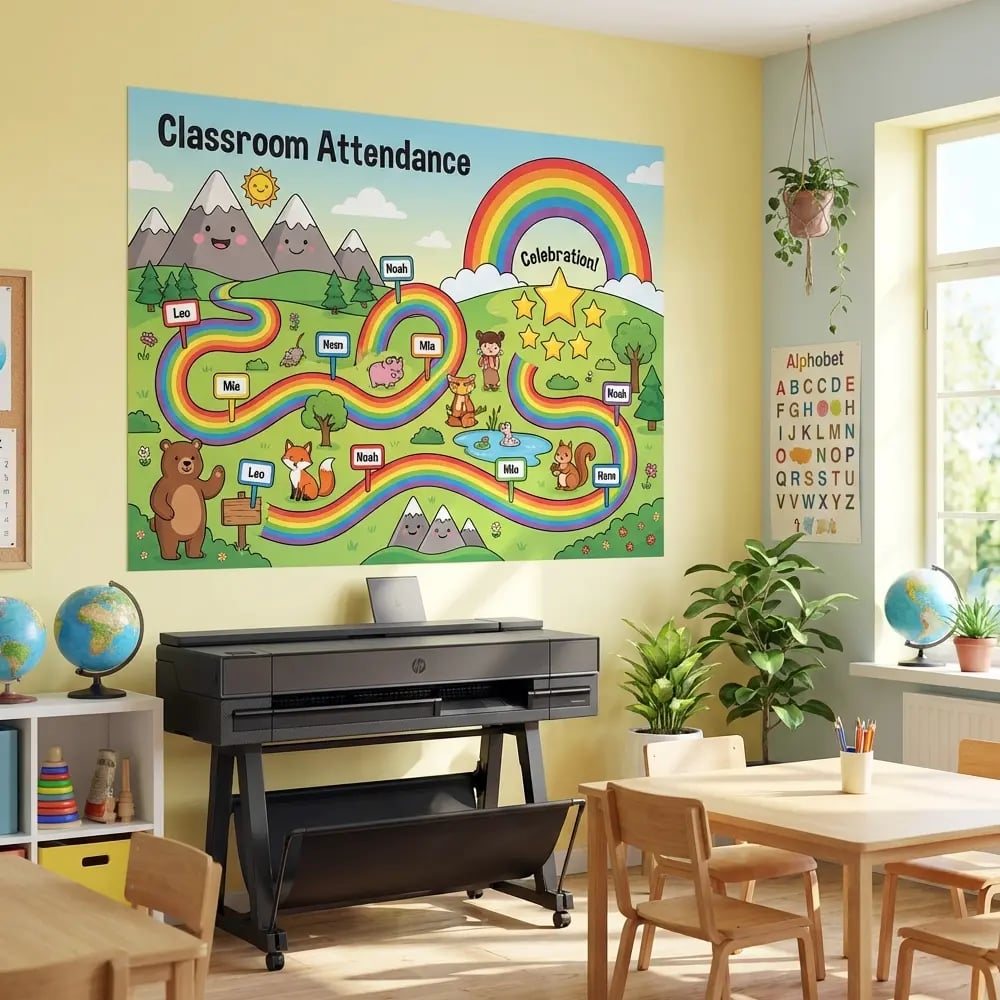
Don’t forget the power of positive reinforcement! Design accomplishment trackers that make progress visible. Whether it’s a sticker chart for completed assignments or a “goal thermometer” for reading minutes, visual progress motivates continued effort. Using a banner printing machine, you can create large, eye-catching celebration posters that make achievements feel significant.
Research from Stanford’s Growth Mindset studies shows that celebrating effort over outcomes builds resilience. Create posters that highlight “persistence points” or “creative problem-solving moments” rather than just perfect scores. This shift in focus helps students value the learning process itself.
Practical Implementation Strategies
Setting Up Your Homework Station
Location matters more than you might think. Educational environment research indicates that dedicated homework spaces improve focus by 40% compared to multi-use areas. Even in small homes, a corner with clear visual boundaries works better than the kitchen table. Use your poster maker machine homework stations to create a visual backdrop that defines the space.
Lighting plays a crucial role too. Position your organizational posters where natural light illuminates them during typical homework hours. If that’s not possible, ensure your artificial lighting doesn’t create glare on laminated surfaces. The goal is easy visibility without eye strain.
Consider creating “zone posters” that designate different areas within the homework station. A supplies zone, reference zone, and work zone help students understand where everything belongs. This spatial organization reduces clutter and improves efficiency.
Customization Tips for Individual Needs
Every family’s schedule and space constraints differ. That’s why having access to customizable poster solutions through Lifetime Design Service makes such a difference. Professional designers can help adapt templates to fit your specific routine, incorporate your school’s vocabulary, or match your home’s aesthetic.
For families with multiple children, consider creating shared posters with individual sections. A homework schedule might have columns for each child, color-coded for easy identification. Supply checklists can include personal and shared items, teaching both independence and cooperation.
Don’t forget seasonal adjustments. Sports seasons, testing periods, and project deadlines all require flexibility in your visual systems. Design modular posters that allow for easy updates without complete redesigns. Dry-erase surfaces or clear pockets for changeable inserts add versatility to your homework station.
Measuring Success and Making Adjustments
Tracking What Works
After implementing your homework station posters, observe how students interact with them. Are they checking the schedule independently? Do they return supplies to designated spots? These behavioral indicators show whether your visual supports are truly supporting. Keep a simple observation log for the first two weeks to identify patterns.
Student feedback provides invaluable insights. Ask what helps most and what feels confusing or unnecessary. Young learners often have surprisingly clear preferences about visual organization. Their input ensures the system works for them, not just around them.
Academic improvements offer concrete evidence of success. Teachers often report better homework completion rates and improved organization skills when families implement structured homework stations. Document these wins to maintain motivation and justify the investment in quality poster-making tools.
Iterating Your Designs
No organizational system remains perfect forever. As students grow and schedules change, your homework station posters need updates. The beauty of having a poster maker machine for homework stations lies in the ability to quickly create new versions.
Plan quarterly reviews of your homework station setup. What worked great in September might need tweaking by November. Maybe the schedule needs adjustment for earlier darkness, or supply needs have evolved with new subjects. Regular updates keep the system fresh and relevant.
Consider creating seasonal versions of certain posters. A winter homework routine might include reminders about snow day assignments or indoor movement breaks. Spring versions could incorporate test prep strategies or end-of-year project planning. This variety maintains engagement while addressing changing needs.
Conclusion: Transforming Homework Time Forever
Ready to transform your homework chaos into calm productivity? Get your free homework station starter templates and discover how easy it is to create custom organizational posters!
Creating an organized homework station isn’t just about pretty posters – it’s about building lifelong learning skills. When families invest in proper visual supports using a poster maker machine homework stations become launching pads for academic success. The combination of thoughtful design, age-appropriate systems, and consistent implementation transforms homework from a daily battle into an opportunity for growth.
Remember, the best homework station is one that evolves with your student. Start simple, observe what works, and adjust as needed. With the right tools and templates, any family can create a homework environment that promotes independence, reduces stress, and celebrates learning. Your future organized, confident student will thank you!