Poster Machines Save Special Ed Teachers 180+ Hours

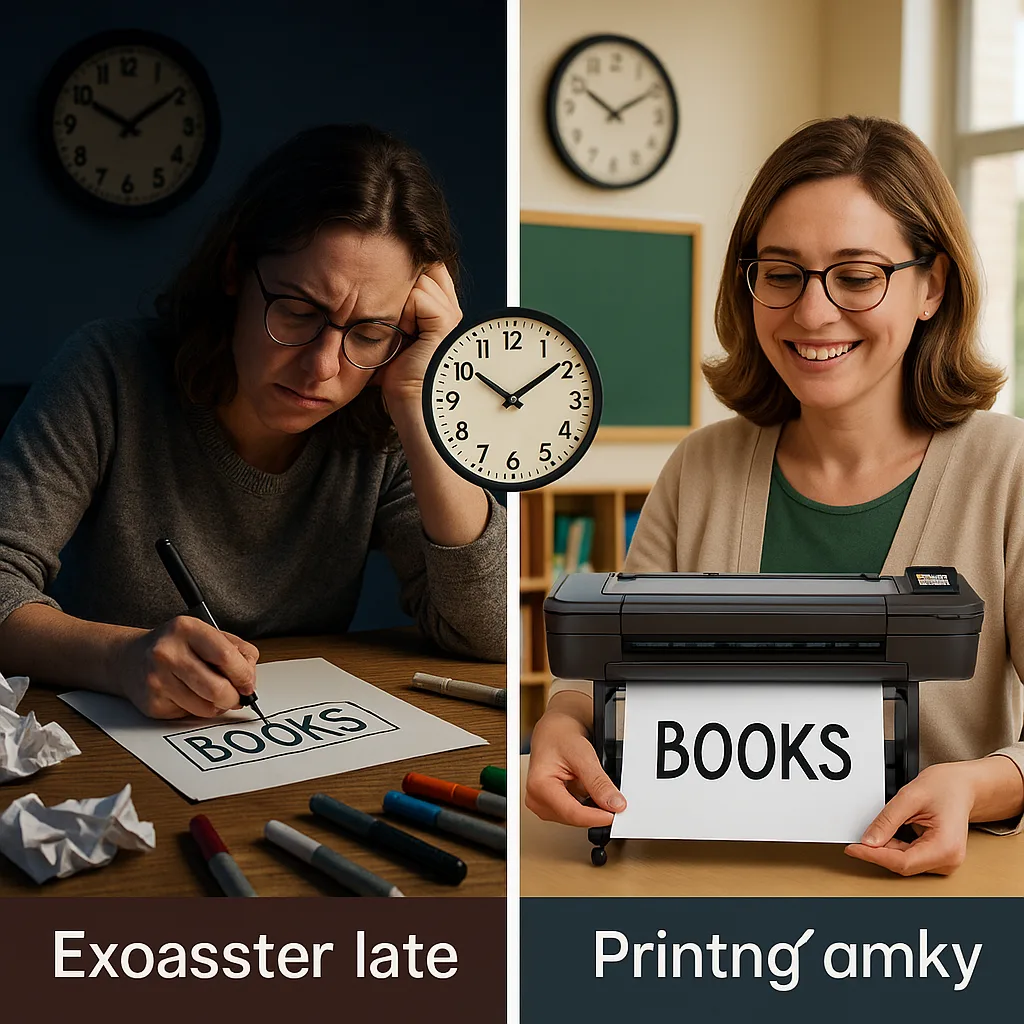
Picture this: It’s Sunday evening, and special education teacher Sarah Martinez sits at her kitchen table, carefully hand-lettering her twentieth visual schedule card. Her fingers ache, but she knows her students with autism need these supports ready for Monday morning. This scene repeats itself in thousands of homes across the nation, where dedicated special educators sacrifice personal time to create essential learning materials. What if I told you that poster machines for special education labels could give Sarah back those precious hours while actually improving outcomes for her students?
The Time Crisis in Special Education Classrooms
Recent data from the National Center for Education Statistics reveals that special education teachers work an average of 53 hours per week during the school year. Of those hours, approximately 15 are spent creating visual supports outside of contracted time. This translates to 540 hours annually—or 67.5 full eight-hour workdays—devoted to handwriting labels, schedules, and communication boards.
Breaking Down the Numbers: Where Time Really Goes
Let’s examine the real-world implications of these statistics. When special education teachers spend 3.75 hours weekly on visual schedules alone, they’re not just investing time—they’re sacrificing opportunities for lesson planning, individualized instruction, and professional collaboration. Furthermore, hand-created materials often lack the consistency and durability required for students who rely on routine and predictable visual cues.
of special education teachers report feeling overwhelmed by material preparation demands
The Financial Impact: Calculating True Costs
When we apply economic analysis to this time investment, the numbers become even more compelling. According to the Bureau of Labor Statistics, the median hourly wage for special education teachers is $31.50. This means those 15 monthly hours represent $472.50 in unpaid labor—or $5,670 annually per teacher.
Beyond Time: The Hidden Costs of Handwritten Materials
The true cost extends far beyond time and money. Handwritten materials often present challenges that directly impact student learning outcomes:
Inconsistency Issues: Students with autism spectrum disorder and other learning differences thrive on consistency. When teachers create materials by hand, slight variations in lettering, spacing, and design can cause confusion and anxiety. Research from the Journal of Applied Behavior Analysis demonstrates that inconsistent visual supports can reduce comprehension by up to 40% in students with processing disorders.
Durability Concerns: Hand-laminated labels and cards wear out quickly under daily classroom use. Teachers report replacing handmade materials every 2-3 months, multiplying the time investment throughout the year.
Accessibility Limitations: Handwritten materials cannot easily accommodate different learning styles. Students who benefit from larger print, specific fonts, or color coding often receive suboptimal supports due to the limitations of manual creation.
Professional Appearance: Parents and administrators increasingly expect professional-quality materials that reflect the importance of special education services. Hand-drawn visuals, while created with care, may inadvertently send a message that special education resources are secondary.
How Poster Machines for Special Education Labels Transform Outcomes
Modern poster maker machines specifically designed for educational settings offer a comprehensive solution to these challenges.
Speed & Efficiency
Create entire classroom label sets in minutes5-Minute Creation
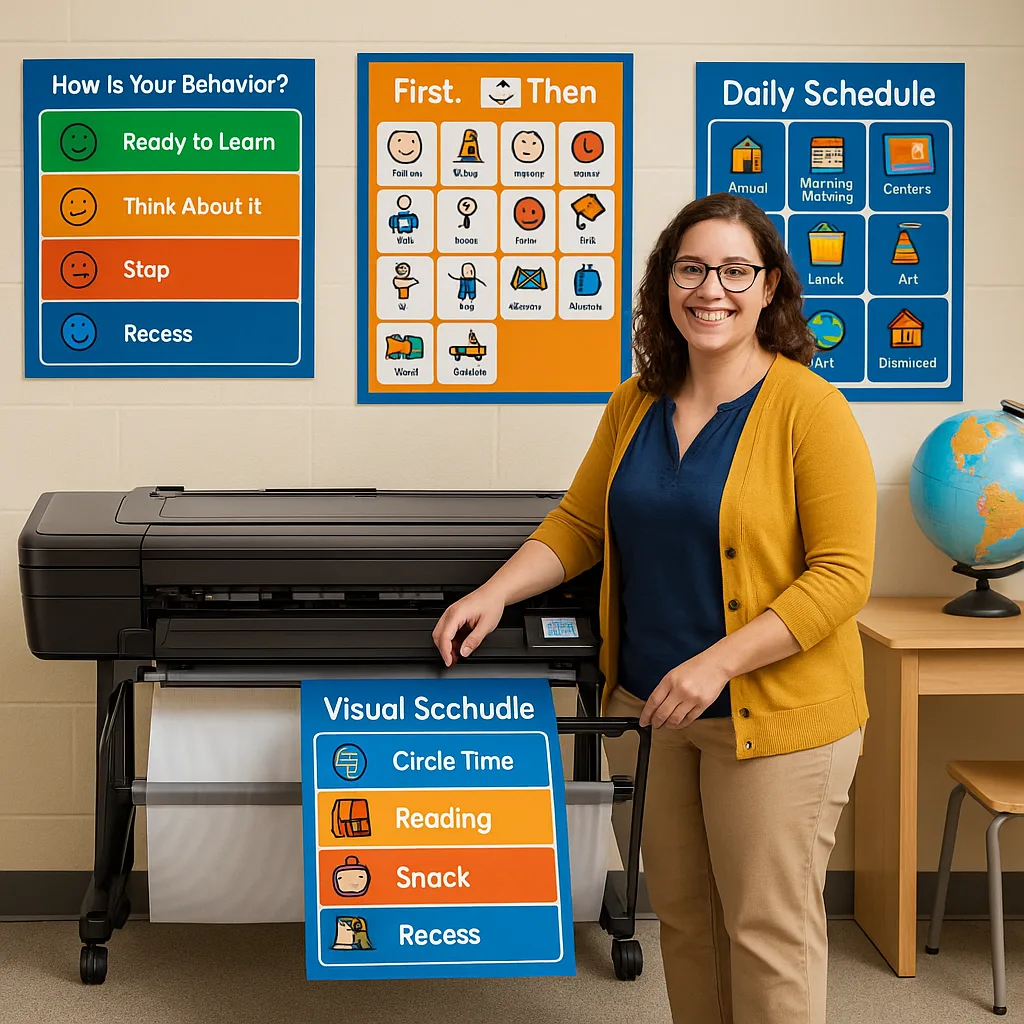
With poster machines, what once took 45 minutes now takes 5. Teachers can create, print, and laminate a complete set of visual schedules during a single prep period. The Education Express 24″ Package A includes drag-and-drop software that makes design effortless.Consistency
Uniform materials every timeProfessional Results
Digital templates ensure every label, card, and visual support maintains identical formatting. This consistency is crucial for students who rely on visual predictability. The included lifetime design service provides custom templates tailored to your specific needs.Durability
Materials that withstand daily useLong-Lasting Materials
Professional-grade printing on coated poster paper creates materials that last the entire school year. The water-resistant finish means spills and daily handling won’t destroy hours of work.Real-World Success: Districts Making the Switch
Across the nation, forward-thinking districts are recognizing the value proposition of investing in poster maker machines for their special education departments. The results speak volumes about both efficiency gains and improved student outcomes.
Case Study: Riverside Unified School District
When Riverside USD invested in Education Studio 36″ Package A+ systems for their special education resource centers, they documented remarkable improvements:
Implementation Strategies for Maximum Impact
Districts achieving the best results with poster maker machines follow specific implementation strategies. First, they establish centralized design libraries where teachers share templates, ensuring consistency across classrooms while reducing redundant work. Second, they provide initial training that emphasizes the software’s accessibility features, empowering teachers to create materials that meet diverse learning needs.
Most importantly, successful implementations leverage the cost-effectiveness of modern poster machines. At approximately $1.30-$1.50 per poster, schools can produce professional-quality materials at a fraction of outsourcing costs while maintaining complete control over design and timing.

Education Express 24 Desktop Poster Printer – Perfect for resource rooms
Funding Solutions: Making Poster Machines Accessible
Understanding that budget constraints often limit technology adoption, let’s explore proven funding strategies.
Federal Funding Opportunities:
IDEA Part B funds specifically support assistive technology and materials that enhance special education services. Poster machines qualify as assistive technology when used to create communication boards, visual schedules, and other IEP-mandated supports. Additionally, Title I funds can be allocated for these systems when they serve students with disabilities in Title I schools.
State and Local Grants:
Many states offer technology integration grants specifically for special education programs. The Teacher Pro Solo Package, starting at just $120/month, fits within most grant parameters while providing comprehensive poster-making capabilities.
Looking Forward: The Future of Special Education Support
As we advance into an increasingly digital educational landscape, the gap between schools with and without efficient material creation systems will continue to widen. Districts investing in poster maker machines today position themselves as leaders in special education support, attracting and retaining quality teachers while improving student outcomes.
The evidence is clear: when special education teachers reclaim those 180+ hours annually through efficient technology, everyone benefits. Students receive more consistent, professional visual supports. Teachers experience reduced stress and increased job satisfaction. Parents see their children’s educational needs being met with professional-quality resources. And districts demonstrate their commitment to inclusive education through tangible investments in teacher support.
Ready to Reclaim Your Time?
Join thousands of special education teachers who’ve transformed their classrooms with professional poster-making technology.