25 Poster Ideas for School Projects by Grade (K–12 Guide)

After 22 years of reading student posters—thousands of them, at every grade from multi-grade primary rooms to AP capstones—I can tell you which ones teach and which ones just decorate. The difference isn't the artwork. It's whether the project was designed around a specific learning objective. This guide organizes 25 poster ideas by grade band, each mapped to the cognitive skills and content standards students are actually working on at that age. Pick the project that matches what you're teaching, not the one that looks the prettiest on Pinterest.
The 4-Part Framework: Is This a Good Poster Project?
Before you assign any poster project—or print one—run it through this screen. I developed this with a cross-content standards committee, and it's the same filter I used when evaluating classroom assignments as a district Director of Curriculum. A project that fails two or more of these tests is a craft activity, not an academic one.
Named learning target
You can state the standard or skill in one sentence. "Students will" comes before "students will make."
Evidence of thinking
The poster shows reasoning, not just recall. A reader should see how the student arrived at the claim.
Audience & purpose
Students know who they're communicating to and why. "A display" is not an audience.
Transferable skill
The work rehearses a skill students need again—summarizing, arguing, modeling, designing—not just this unit.
25 Poster Ideas, Organized by Grade Band
Click a grade band to see the five projects I've seen produce the strongest academic outcomes—including what makes each one work, what to tag in your rubric, and how long to budget.
All About Me "Data Self-Portrait"
Students represent themselves using a simple pictograph or tally chart—favorite foods, family members, number of pets. Teaches early data representation inside a personally meaningful frame, which dramatically boosts retention.
Sequence-of-Events Story Map
After a read-aloud, students illustrate the beginning, middle, and end on a three-panel poster. Add arrows. This is the scaffolding that becomes paragraph structure in grade 3.
Living vs. Non-Living Sort
A T-chart poster where students cut and paste (or draw) examples into the correct column, with a sentence frame explaining how they knew. The justification piece is what makes it science, not art.
Community Helper Spotlight
One helper per student, with three sections: what they do, what tools they use, how they help our community. Integrates vocabulary with civics content standards.
Number of the Day Poster
Pick a number. Show it five ways: numeral, ten-frame, tally, word, and a real-world example. Builds flexible number sense, which is the strongest predictor of later math achievement.
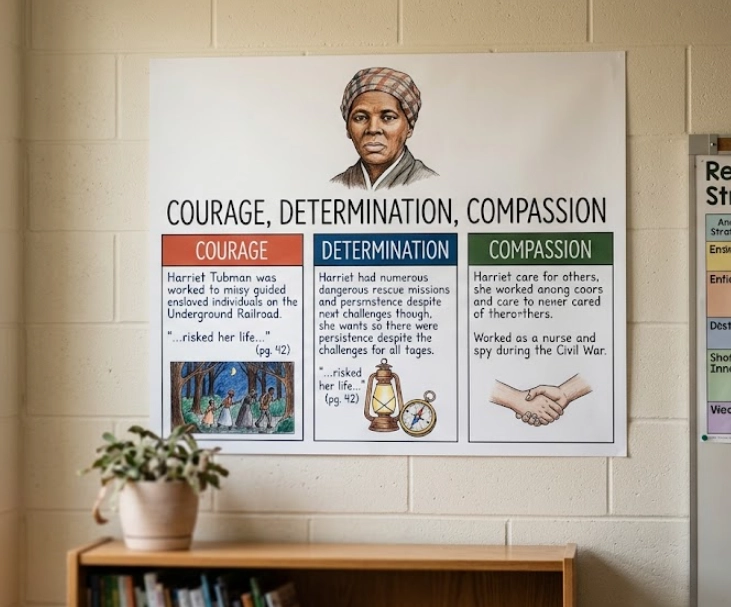
Biography "Character Trait" Poster
Pick a historical figure. Identify three character traits and support each with one piece of evidence from their life. This is argumentation in disguise, and it transfers directly to the evidence-based writing expected on state assessments.
Ecosystem Food Web
Students build a labeled food web for a chosen biome, with arrows showing energy flow and an "if-this-disappears" disruption analysis. Hits systems thinking, a core NGSS practice.
Fractions in the Real World
Students photograph or draw five real-world fractions (a pizza slice, a measuring cup, a clock face) and explain each using accurate fraction vocabulary. Builds the representational fluency that becomes a barrier later if skipped.
State or Region Research Poster
Geography, economy, and one "surprising fact." Require at least two sources and a short bibliography. This is often students' first structured research experience—treat it like one.
Book Recommendation Poster
Persuasive poster arguing why a peer should read a book. Must include a claim, two reasons, and a non-spoiler hook. Authentic audience (classmates) is what makes this stick.
Historical Cause-and-Effect Web
Central event in the middle (e.g., the Industrial Revolution). Causes branch left, effects branch right, with each arrow labeled as short-term or long-term. Trains the exact causal reasoning tested on state assessments.
Science Fair Research Poster
Full scientific-method format: question, hypothesis, methods, data, conclusion. This is the genre students will use through graduate school—middle school is where they should learn the conventions.
Linear Equation Visualization
Students choose a real-world scenario (phone plan, savings account, workout progression), write the equation, graph it, and explain slope and y-intercept in context. Abstract math becomes legible.
PSA on a Social Issue
A single-focus persuasive poster on a relevant issue (screen time, food waste, water use). Requires a claim, credible statistic, and a specific call to action. Strong crossover to ELA argumentation standards.
Literary Analysis One-Pager
Fixed format: one central image, one theme statement, two text-evidence quotes (with citations), one personal connection. The constraint forces synthesis—which is exactly what we're after.
Academic Research Poster (IMRaD)
Introduction, Methods, Results, Discussion—the structure used at every academic conference. Treat it as a dress rehearsal for college research and make the rubric match.
Policy Analysis Brief
Students pick a contested policy, summarize it, list three stakeholders with their positions, and recommend a course of action with supporting evidence. Directly aligned to civics and AP Gov expectations.
CTE Design Brief Poster
For engineering, culinary, health sciences, or any Perkins-funded CTE pathway. Problem statement, user persona, iterations, final prototype, reflection. I've funded dozens of these through Perkins V—judges want to see iteration.
Data Storytelling Poster
Students pull a public dataset (Census, CDC, BLS), identify a trend, and build a poster that makes a specific argument with visualizations. This is the exact skill every knowledge-economy job requires.
Capstone / Senior Project Display
Full research question, methodology, findings, and reflection on a year-long independent study. Build the rubric off AP Capstone or IB extended-essay criteria.
Compare & Contrast Poster
Two subjects, clear similarities and differences, a concluding claim. Works for two characters, two ecosystems, two historical periods, two functions. The conclusion is the load-bearing element.
Timeline with Turning Points
Not just a list of dates. Require students to identify 2–3 turning points and justify why. Turns a recall exercise into historical reasoning.
Infographic "Explain Like I'm..." Poster
Students explain a concept to a specified audience (a 2nd grader, a grandparent, a skeptic). The audience constraint forces real understanding—if you can't explain it, you don't know it.
Process Anchor Chart (Student-Made)
Students—not the teacher—produce the reference poster that stays on the wall. Summarizing a process into a poster is one of the highest-retention activities in the research literature.
"Myth vs. Fact" Poster
Students correct common misconceptions with cited evidence. Hits media literacy standards and works for everything from science misconceptions to historical myths.
Poster Project Matchmaker
Answer two quick questions and I'll point you to the format and material that fit.
The Factor Most Teachers Underweight: Print Quality
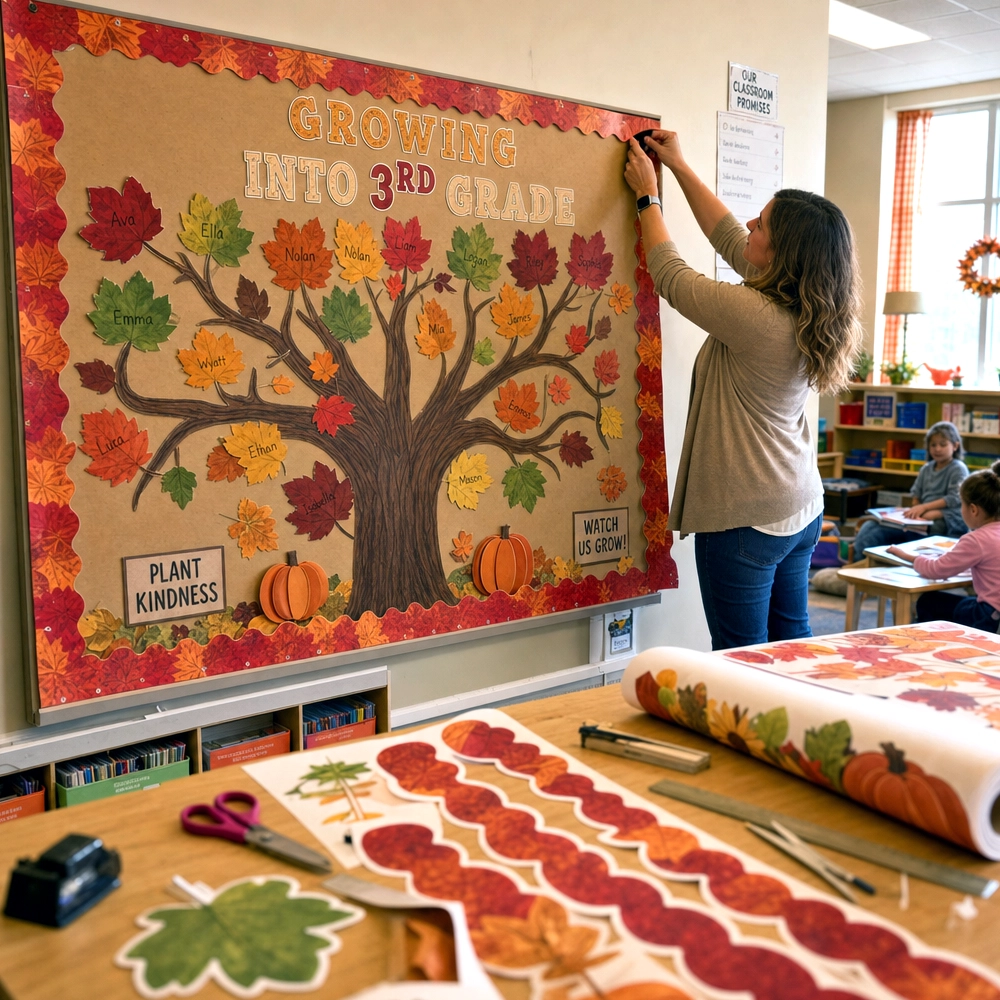
In two textbook-adoption cycles, I watched districts invest thousands in curriculum and then print the student-facing materials on the cheapest paper available. The result was predictable: smudged diagrams, faded colors, posters that curled off the wall by November. Students read that environment. When learning materials look temporary, the learning feels temporary. (The same logic extends past projects to the room itself — our guide to 50 classroom decoration ideas shows what teachers print in-building for about $2 each.)
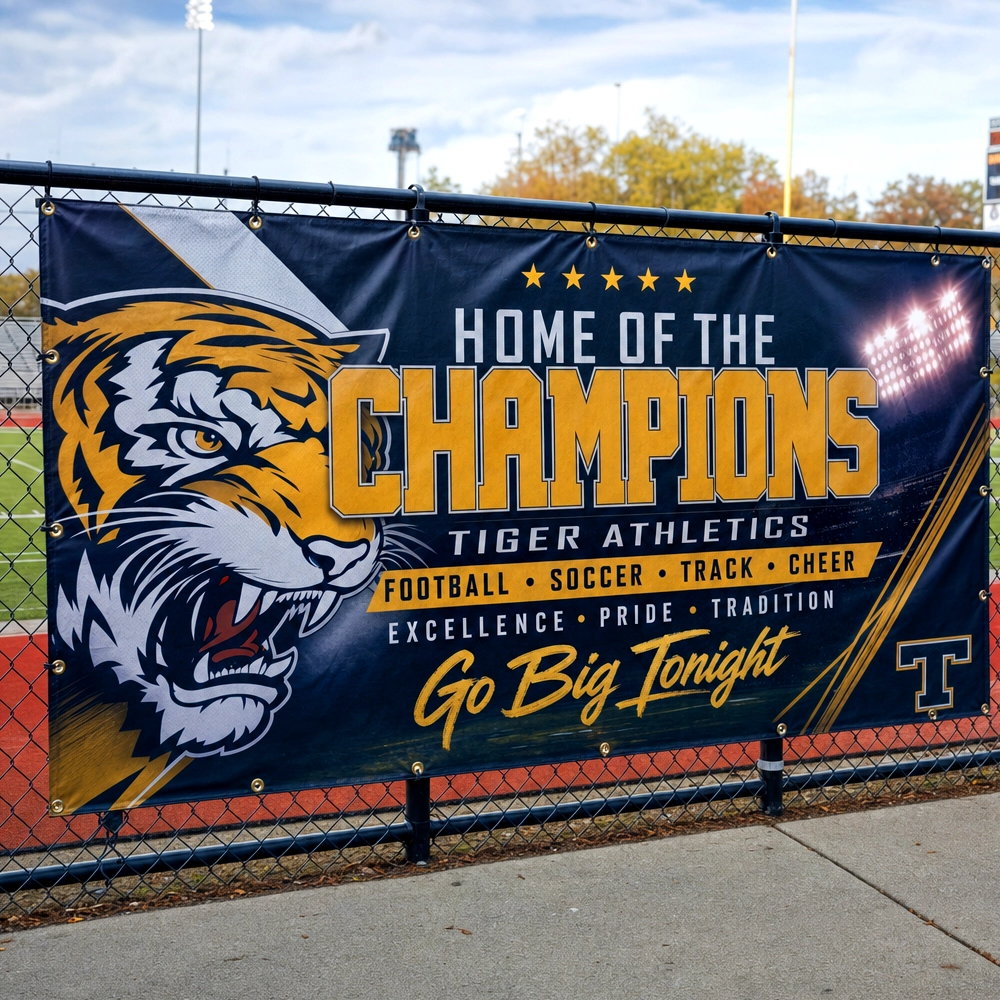
The fix isn't expensive. Matching the paper stock to the project's purpose matters more than spending more. A PBIS anchor chart that will hang all year belongs on satin photo paper—vibrant color, glare-resistant, doesn't yellow. A quick in-class formative display is perfectly fine on standard poster paper. Outdoor banners for graduation or field day need premium outdoor vinyl with grommets—anything less fails in the first rain.
A note on who should be printing these
If your teachers are using 8.5×11 paper taped together to simulate a poster, that's a budget signal worth acting on. A classroom poster maker pays for itself inside a year in most buildings I've audited, and it removes a friction point that silently suppresses how often teachers use visual anchors at all. I've covered this in detail in our school poster maker primer—worth a read before your next capital request. Printing without the in-house equipment is also a valid path: order the paper, print through a service, keep your budget flexible.
Three Mistakes I See in Almost Every Poster Rubric
1. Weighting "creativity" above content accuracy. If 25% of the grade is creativity and 15% is accuracy, you've told students what you actually value. Flip those numbers.
2. No word-count ceiling. Posters are a summarization genre. Without a cap, students paste paragraphs. Set a maximum (say, 150 words for elementary, 300 for secondary) and treat it as non-negotiable.
3. Grading the final product only. Require a planning artifact—storyboard, outline, source list—submitted before students touch a single sheet of paper. This is where the thinking happens, and where feedback has real leverage.
Get the paper right the first time
Teacher-tested stocks, school-friendly pricing, fast shipping.
Dr. Maya Richardson
Ed.D. Curriculum & Instruction · M.Ed. Educational Leadership
Maya's 22-year career began in a multi-grade classroom and progressed to district-level Director of Curriculum. She has chaired cross-content standards-alignment committees, overseen two textbook-adoption cycles, and written winning Title II and Perkins V grants. Her hallmark is translating 200-page policy documents into four-page pacing guides teachers can pick up on Monday morning.